Culture
Museums and exhibition buildings form important anchor points on different sides of the hill.
View, culture and greenery
Montjuïc is a hill southwest of the centre where museums, gardens, sports venues, viewpoints and historic buildings are scattered. The area is larger and more relief than many visitors expect. A visit therefore works best if you choose one sub-area and a few main locations in advance, instead of trying to combine all the sights at once.
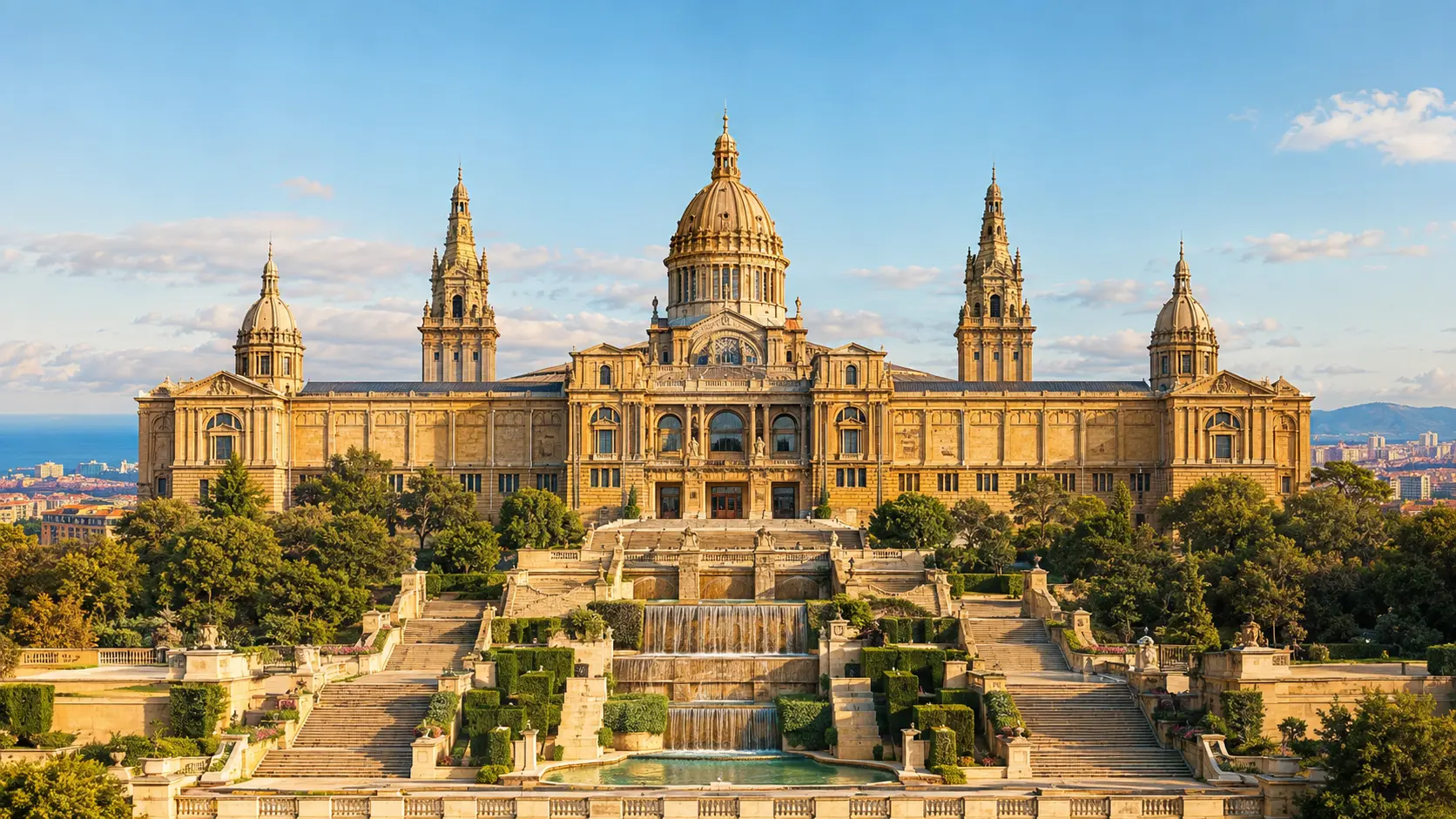
Montjuïc is not a compact monument square, but a vast area with height differences and different accesses. The cultural axis around Plaça d'Espanya, the Olympic locations, the gardens and the castle are not all directly next to each other. Therefore, distinguish between a museum visit, a walk through the gardens and a route to the top.
Museums and exhibition buildings form important anchor points on different sides of the hill.
Gardens, terraces and viewpoints show a greener and relief-rich side of Barcelona.
The castle, historic infrastructure and buildings from different periods show multiple layers of the city's history.
Elevation changes and dispersed locations make a targeted route more practical than a complete loop.
Choose one main activity and add some outdoor locations. Check in advance which buildings are accessible and which transport options are actually available on the day of your visit.
The Palau Nacional is a recognizable building on the slope above Plaça d'Espanya and houses the Museu Nacional d'Art de Catalunya. Choose the museum as your main activity when you want to view the collection; the building, the stairs and the surroundings also form clear landmarks.
Montjuïc's Olympic chapter is visible around the Estadi Olímpic, Palau Sant Jordi and the surrounding public space. You can view this area on foot, without assuming that every building is freely accessible.
The castle is located on the higher part of the hill and is a possible main location for visitors with an interest in history and views. The military function and the complex history require a factual approach.
Montjuïc contains several gardens and green areas with varying designs and plantings. Choose a botanical garden or one other garden as a separate visit; the gardens do not form a compact park.
The Fundació Joan Miró is a possible main activity for visitors with an interest in modern art and architecture. Check current access and programming with the official institution.
Views towards the city, harbor and coast are possible from various parts of Montjuïc. View, tranquility and access may differ per location and time.
Hiking idea
This example route connects a number of landmarks. It is not a complete tour and you can choose one museum, the Olympic zone or the castle as your final destination.
Plaça d'Espanya→Palau Nacional→Fundacio Joan Miro→Olympic area→Chosen end point
Use the visual axis towards Palau Nacional as orientation and decide whether the museum will be your main activity.
View the building and the terraces and only enter if this has been chosen in advance as your main visit.
Follow a suitable walking route through the greenery and take into account height differences and possible route changes.
Use the major sports locations as landmarks and choose on the spot whether to continue the route further up.
For example, choose a garden, a viewpoint or Castell de Montjuïc. The castle is not automatically a short extra stop.
Montjuïc combines monumental buildings, infrastructure, gardens and open spaces. The atmosphere varies greatly between museum environments, sports areas, green areas and busy access points; tranquility, hustle and bustle and accessibility can differ per place and time.
Choose MNAC or Fundació Joan Miró as your main visit.
Combine a garden with several viewpoints within one sub-area.
Direct the route towards the castle, the Olympic area or the monumental axis.
Several museums and cultural buildings make a targeted substantive visit possible.
Gardens and viewpoints can be included alongside one cultural location.
Due to the distances and height differences, Montjuïc works well for those who want to make choices in advance.
Mobility, weather conditions, crowds and current access influence the experience.
The best arrival point depends on your main goal.
Locations are spread out and routes are not smooth everywhere.
Operation and accessibility of means of transport on the hill may change.
A museum visit and outdoor locations each require sufficient attention.
Avoid unnecessary travel back and forth over the hill.
Also leave room for outdoor locations.
Use official providers just before departure.
Adjust route and pace to your mobility and energy.
Palau Nacional and the sports venues help determine direction.
A garden or viewpoint can be adapted to weather and energy.
Choose combinations based on your time and interest; multiple extensive visits do not naturally fit into one short half-day.
Combine part of the hill with the adjacent residential area, but do not include Montjuïc entirely as part of Poble-sec.
Use the square as access to the monumental axis and as a logical starting or ending point.
Choose a continuation towards the port only when route, time and energy permit; this is not automatically a short walk.
Montjuïc is especially interesting for visitors who want to combine culture, greenery, views and different layers of the city. The area requires more planning than a compact attraction. By choosing one main location and a limited number of outdoor areas, the visit remains clear and creates space to explore the hill in a targeted manner.
You can choose a museum, garden, historic building, Olympic venue or viewpoint. Due to the distances, one main goal with a few outdoor areas is often the most clear.
This depends on the chosen sub-area, height differences and any indoor visit. There is no fixed visiting time.
Parts can be connected by foot, but the hill is vast and rich in relief. Choose a targeted route and check current transportation options.
The MNAC and the Fundació Joan Miró, among others, are located on the hill. Check current access in the settings themselves.
Yes. Poble-sec is at the foot of the hill, but treat an extended Montjuïc route and a neighbourhood walk as separate parts.