Historical street pattern
The narrow streets and passageways show how differently the old centre is structured than the straight avenues of neighbourhoods such as Eixample.
Historic Barcelona
Barri Gòtic is an important part of the historic centre of Barcelona. Roman, medieval and later periods of the city's history are visible around narrow streets, old squares and monumental buildings. The name therefore suggests more unity than the current cityscape actually has. The district is compact, but due to the winding street pattern it is wise to choose a limited number of places and also leave room to look around quietly.
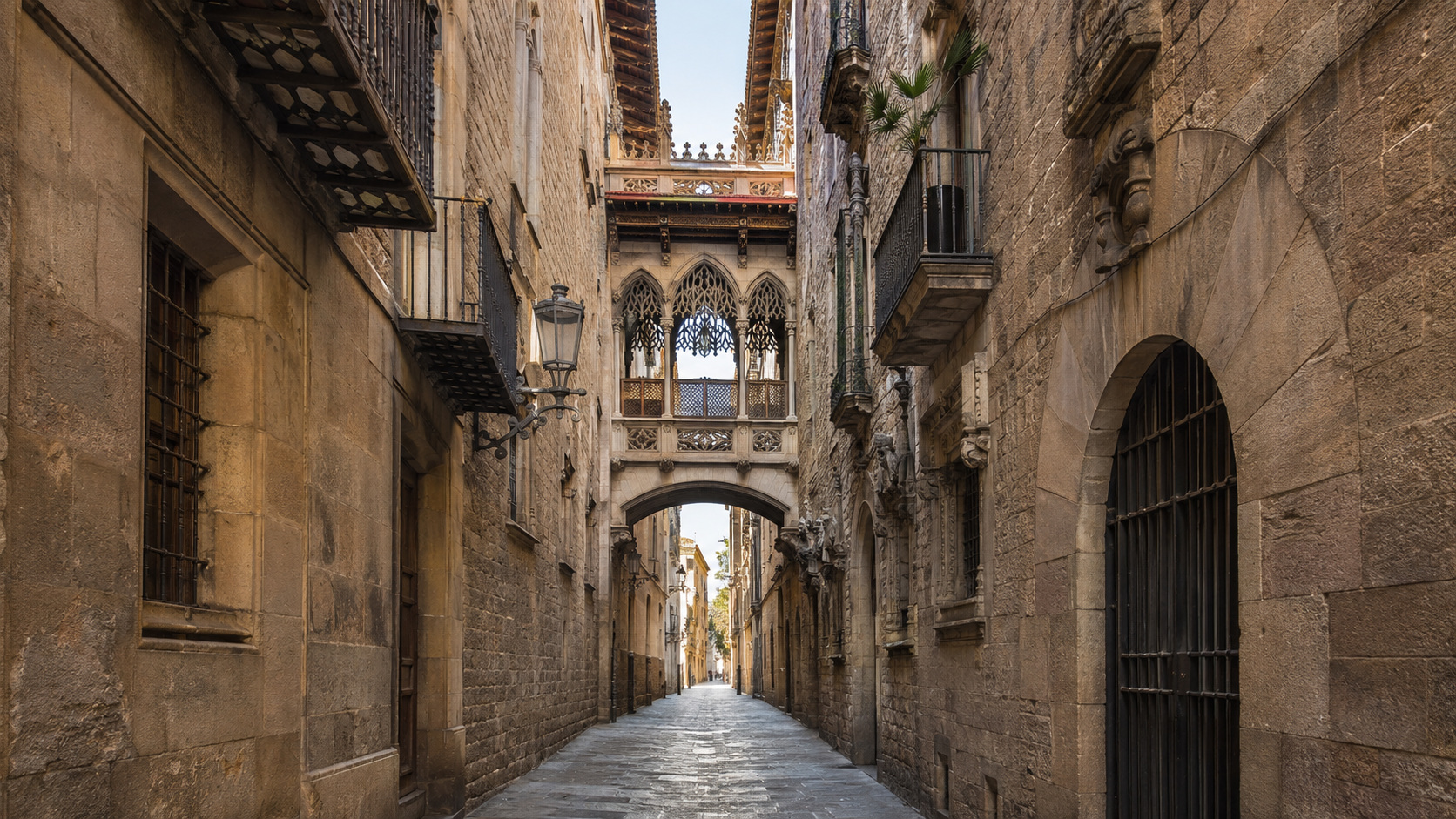
The district consists of more than a collection of well-known monuments. It is precisely the alternation between main streets, small passages, quiet squares and busy routes towards La Rambla that determines the character. Some places are close to each other, but due to crowds and the irregular street pattern, a visit can take longer than the distance on the map suggests.
The narrow streets and passageways show how differently the old centre is structured than the straight avenues of neighbourhoods such as Eixample.
Famous buildings alternate with smaller squares where you can slow down the pace of the walk.
Barri Gòtic is located between La Rambla, Plaça de Catalunya, El Born and the Port Vell area.
The most famous streets can be busy, while nearby side streets and squares sometimes have a completely different character.
Wil je de historische architectuur en monumenten als gerichte wandeling bekijken? Gebruik dan de historische wandeling door Barri Gòtic.
The most important places are relatively close to each other. Choose a number of sights that suit your interests and use the streets and squares in between as part of the visit.
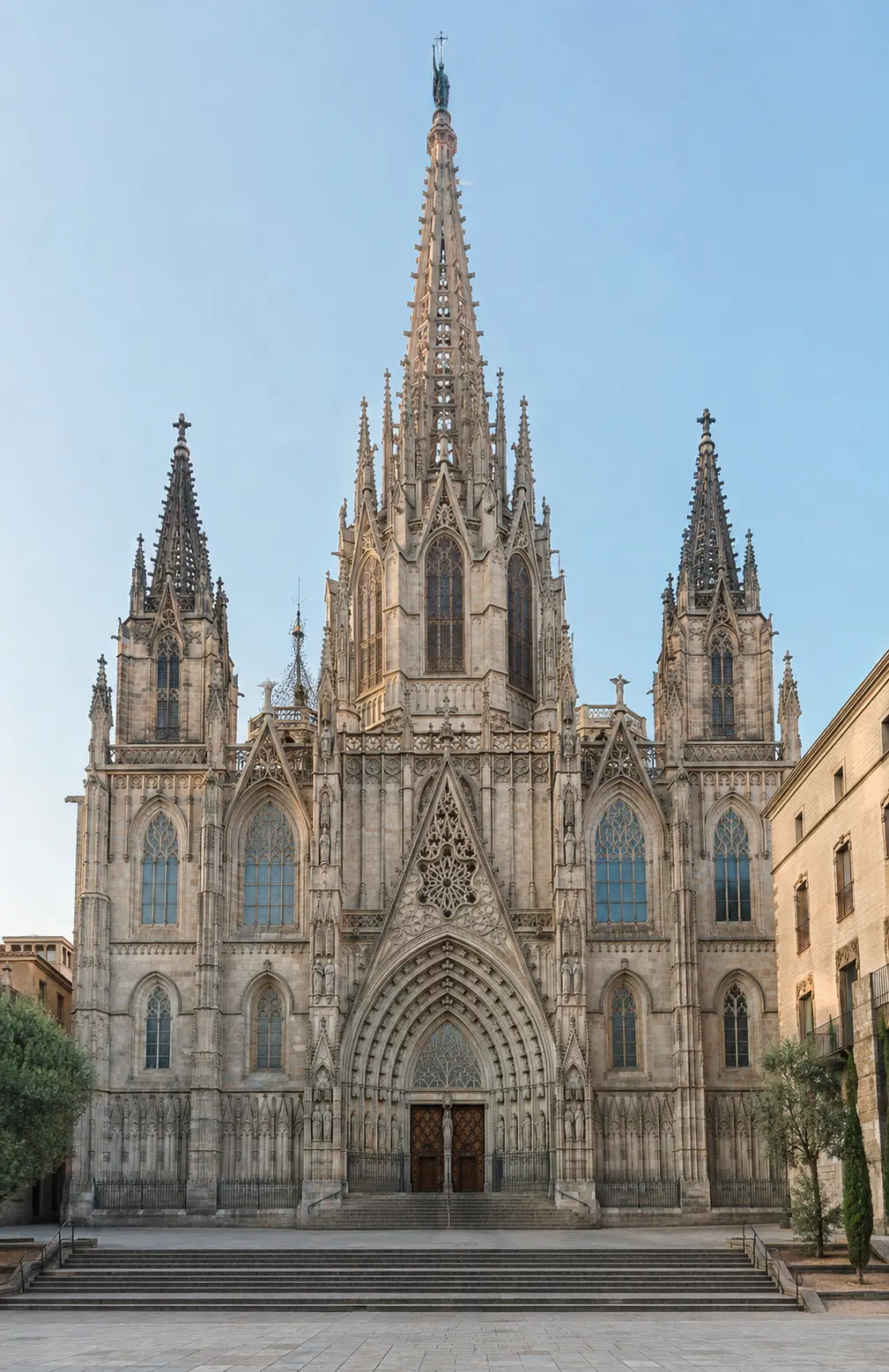
The cathedral and the surrounding square form a recognizable point in the historic centre. View the facade and the immediate surroundings, or check the current visitor information in advance via the official provider when visiting the interior.
Practical: Current entrance prices, opening hours and access may change.
Surrounded by monumental buildings, this historic square is a tranquil landmark within the network of ancient streets. The square can be combined well with the surroundings of the cathedral.
Plaça Sant Jaume is an important administrative square in the centre of the old town. It is located on a logical link between the Cathedral, Carrer del Bisbe and other parts of Barri Gòtic.
This narrow street is best known for its historic surroundings and striking bridge. Use the street as a short connection and take into account possible crowds around popular photo spots.
Plaça Reial is located close to La Rambla and, due to its arcades and open shape, has a different character than the narrower streets of the district. The square can be used as the starting or ending point of a walk.
Traces of older periods are visible in various places in and around Barri Gòtic. Anyone who wants to visit specific archaeological locations or museum spaces must check the current access and visitor information in advance with the official manager.
Hiking idea
This walk is one possible way to explore the neighbourhood. The route does not contain fixed times and does not have to be followed completely. Shorten the walk when it is busy or if you want to stay longer on a square or near a building.
Barcelona Cathedral→Carrer del Bisbe→Plaça Sant Jaume→Plaça del Rei→Plaça Reial
Use the cathedral and the surrounding square as a recognizable starting point. View the facade and then walk further into the neighbourhood via the streets on the western or southern side.
Follow Carrer del Bisbe towards Plaça Sant Jaume. Also include nearby passages or squares when it is quieter there, but do not add mandatory detours.
Use the square as a landmark. From here you can continue to Plaça del Rei or shorten the route and walk towards La Rambla.
Head towards Plaça del Rei and take time to admire the square and the historic buildings surrounding it. A museum visit is a possible addition, but not a mandatory part of the walk.
Walk along the southwestern streets of the neighbourhood towards Plaça Reial. From here you can continue to La Rambla, El Raval or Port Vell.
Barri Gòtic alternates narrow passages with larger squares and busy connections towards La Rambla and Plaça de Catalunya. The atmosphere can change within a few blocks. During the day, the famous monuments and shopping routes attract many visitors, while other parts feel more like a residential or transit area. Therefore, do not expect it to be quiet, authentic or traffic-free everywhere.
Choose a few squares and side streets and avoid a program that is too strict.
Concentrate the visit around the cathedral, Plaça del Rei and Plaça Sant Jaume.
Use Plaça Reial or the east side of the neighbourhood to continue to an adjacent area.
The central location and historic sites make the district a logical choice for visitors who want to get to know the old centre.
The combination of streets, squares, religious buildings and archaeological traces offers various starting points for a historical visit.
The neighbourhood is compact, but uneven pavement, crowds and the winding street pattern can affect the walking pace.
Whether the neighbourhood suits you also depends on personal interests, mobility, crowds and the circumstances on the day itself.
Barri Gòtic is centrally located and connects to various parts of the old city. The best arrival point depends on where you want to start the walk.
Use public transport to get to the centre and then explore the neighbourhood largely on foot.
Choose one recognizable start and end point in advance, because the street pattern is less clear than in Eixample.
Take into account narrow streets, busy passageways and locally uneven paving.
If you have limited mobility, check the chosen route and the accessibility of specific buildings in advance.
Choose the Cathedral, Plaça Sant Jaume or Plaça Reial as your landmark. This means that the route remains clear when you take a side street in between.
Choose one or two buildings that you really want to see from the inside. This leaves time for the streets and squares themselves.
The crowds can vary greatly per route and time. Shorten the walk or choose a nearby side street if that is more convenient.
It is not only the large monuments that determine the historical image. Take time along the way for passages, facades and the transition between different construction periods.
Access, opening hours and visitor conditions may change. Consult the official manager when an interior visit is important.
For example, choose El Born, El Raval or the port as a follow-up. Don't try to automatically cover multiple entire neighbourhoods in one visit.
These are possible combinations. Do not automatically cover multiple entire neighbourhoods or areas in one day.
Walk towards the east side of the old town if you want to combine historic streets with Santa Maria del Mar, Carrer Montcada or Parc de la Ciutadella.
Cross La Rambla for another part of Ciutat Vella with cultural institutions, wide squares and a distinctly different street scene.
Walk from the southern part of the neighbourhood towards the harbor and then choose whether you want to continue along the water.
Barri Gòtic is especially interesting for visitors who want to discover the historic centre on foot. The combination of monuments, squares and narrow streets makes the district suitable for a short walk or a more extensive visit with one or two selected sights. The visit remains more manageable if you do not plan every street and every building in advance as a permanent stop.
You can see the cathedral, Plaça del Rei, Plaça Sant Jaume, Carrer del Bisbe and Plaça Reial, among others. Choose a few spots and also leave room for the streets and smaller squares in between.
That depends on your walking pace, the crowds and any interior visits. A short neighbourhood walk may suffice, while viewing one or two buildings from the inside requires more time.
The district is compact and is largely explored on foot. Please take into account narrow streets, uneven paving and busy passageways.
El Born and El Raval are located directly in the area. La Rambla, Port Vell and the route to Barceloneta are also possible continuations.
The central location and historic sites make the district a natural introduction to the old city. Whether this suits you depends on your interests, mobility and the crowds on the day itself.