City grid
Ildefons Cerdà's plan is recognizable by its straight streets, regular building blocks and beveled corners.
Modernism and urban planning
Eixample is the vast district of the city surrounding the recognizable grid of wide streets, sloping street corners and modernist architecture. Along Passeig de Gràcia and in surrounding streets are famous buildings by Antoni Gaudí, Lluís Domènech i Montaner and Josep Puig i Cadafalch, among others. Because Eixample consists of several neighbourhoods and covers a large area, a visit works best if you choose in advance between architecture, city walking or one important interior visit.
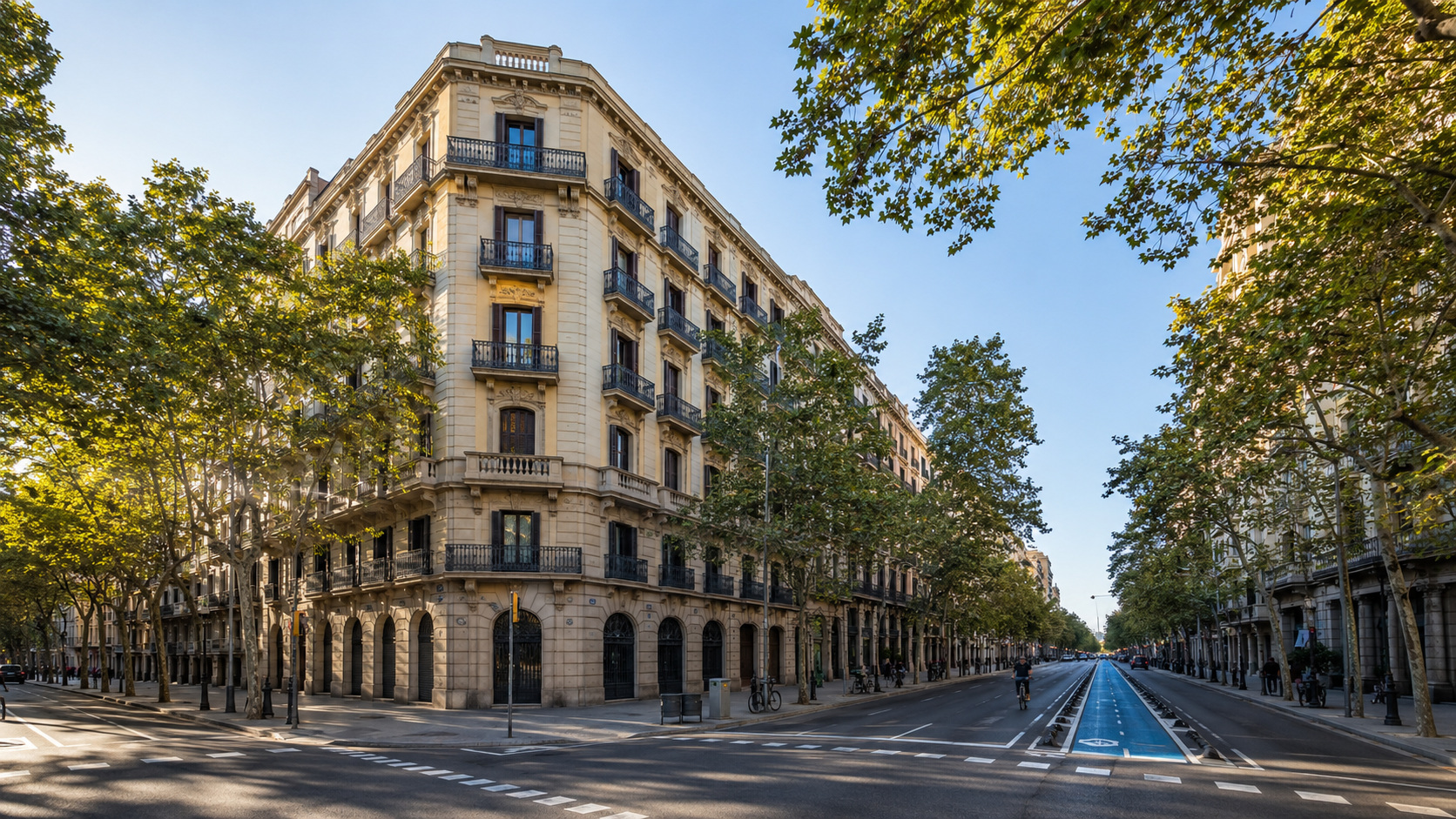
Eixample is both a district and the name visitors often use for much of the nineteenth-century urban expansion. The district consists of several neighbourhoods with different functions and atmosphere. The area around Passeig de Gràcia, Sagrada Família, Sant Antoni and other parts of the district therefore do not form one compact, uniform walk.
Ildefons Cerdà's plan is recognizable by its straight streets, regular building blocks and beveled corners.
Important examples of Catalan modernist architecture can be found along well-known avenues and in surrounding streets.
Eixample is large and includes busy shopping streets as well as residential streets, squares and neighbourhoods with their own character.
The district is located between the old city and several neighbourhoods further north and west. The desired activity determines which part makes the most sense to visit.
The most famous buildings are not all directly next to each other. Therefore, choose one logical sub-area and decide in advance whether you mainly want to view facades or visit one building from the inside. An extensive interior visit can take up a large part of the day.
Passeig de Gràcia is a wide avenue with modernist buildings, shops and busy city traffic. Use the street as a clear architectural route and also look at facades, balconies, paving and street corners.
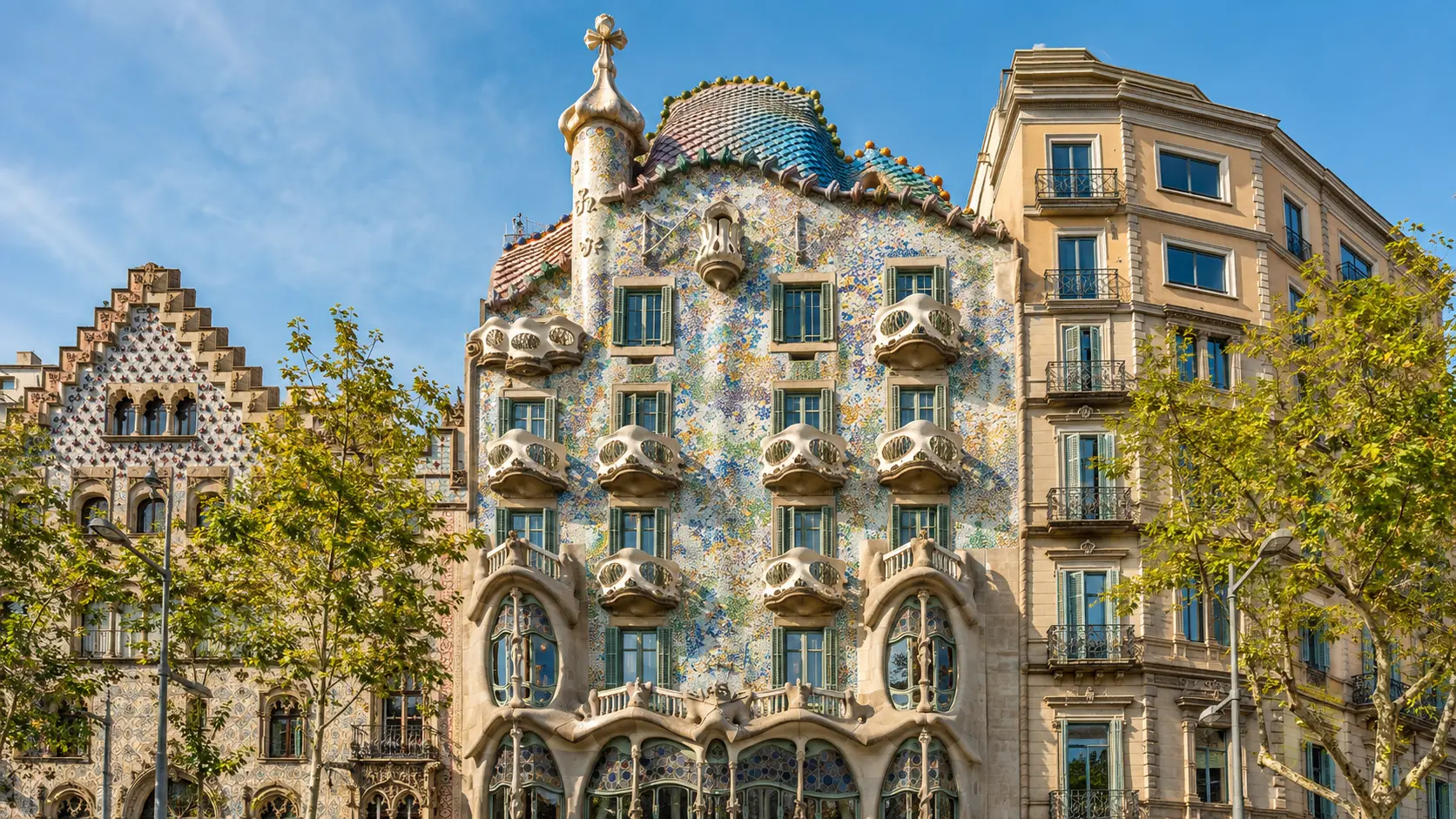
Casa Batlló is a well-known design by Antoni Gaudí on Passeig de Gràcia. View the facade during a walk or choose the building as a separate interior visit.
Practical: Always check access, availability and current visitor information with the official manager.
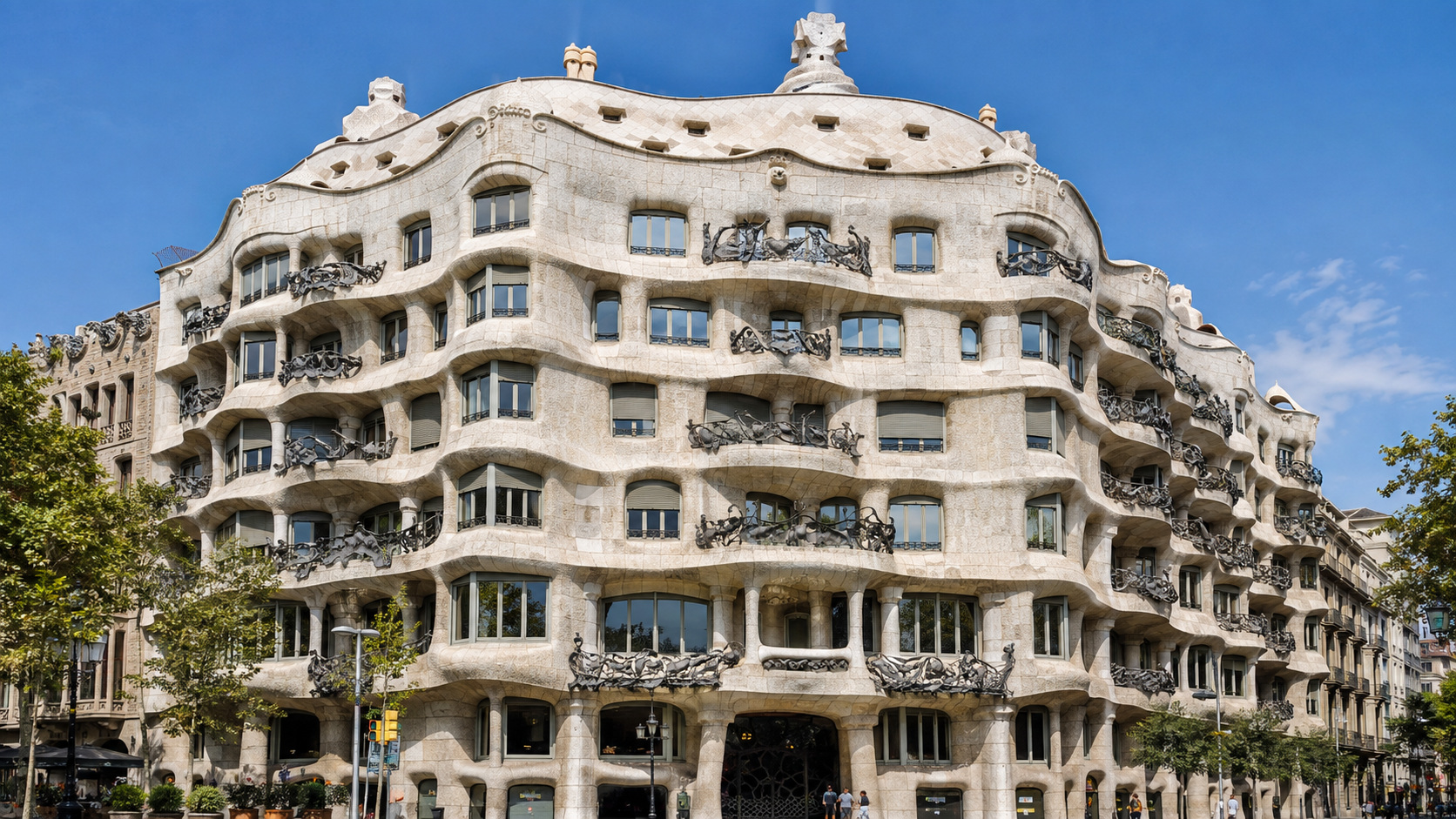
Casa Milà, often called La Pedrera, is another recognizable work by Gaudí on Passeig de Gràcia. View the building from the outside or choose it as the main activity of an architecture walk.
Practical: For current access, please consult the official administrator only.
The block of houses around several striking modernist facades shows different architectural styles close together. Not every building in this part of Passeig de Gràcia is by the same architect.
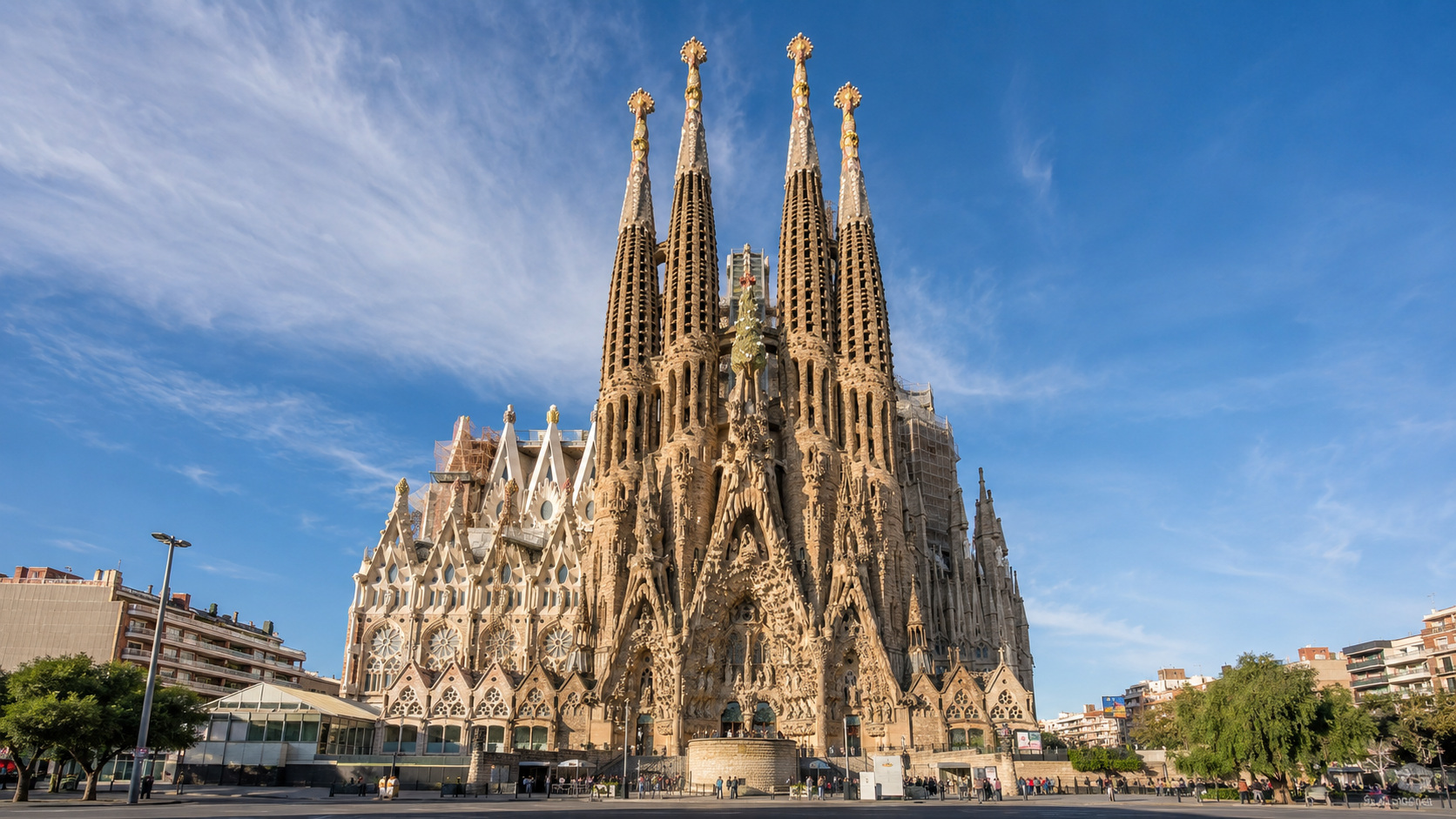
The Sagrada Família is located in a different part of Eixample than the main buildings on Passeig de Gràcia. Choose the basilica as a separate main activity or as the end point of a longer walk.
Practical: Check current access, conditions and visitor information with the official manager.
Not only monuments, but also the spatial structure makes Eixample recognizable. Note the regular building blocks, wide intersections and sloping corners, without assuming that every street has the same character.
Hiking idea
This sample walk connects part of Passeig de Gràcia with streets towards Sagrada Família. The connection is longer than a compact walk through Ciutat Vella. Shorten the route or use public transport if you want to take a detailed look at one building from the inside.
Plaça de Catalunya→Casa Batlló and Illa de la Discòrdia→La Pedrera – Casa Milà→Avinguda Diagonal→Sagrada Família
Use the beginning of Passeig de Gràcia as a recognizable starting point. Plaça de Catalunya is the transition between the old town and Eixample, not the central point of the entire district.
Walk north and see Casa Batlló and the other modernist facades around Illa de la Discòrdia. Only choose an interior visit if this is the main focus in advance.
Continue along Passeig de Gràcia to Casa Milà. Along the way, also pay attention to the width of the avenue, the side streets and the structure of the building blocks.
Use the area around Avinguda Diagonal as a transition to the eastern part of the walk. This is a longer urban connection and not a contiguous monument zone.
View the basilica and the immediate surroundings as the end point. Anyone who wants to visit the interior must check the current conditions in advance and plan this as the main part of the day.
Eixample combines monumental avenues, residential streets, shops, offices, traffic and public space. Well-known axes such as Passeig de Gràcia can be busy, while other streets have a different rhythm. The entire district is not uniformly chic, quiet, businesslike, residential or exclusively modernist.
Concentrate on Passeig de Gràcia and possibly choose one building for an interior visit.
Note the grid, the building blocks, beveled corners and the way broad axes intersect the street grid.
Plan Sagrada Família as a separate focus and only add an additional walk when time and energy permit.
The district contains several well-known examples of modernist architecture, but not all buildings are directly next to each other.
The wide avenues and regular grid provide a different walking experience than the narrow streets of Ciutat Vella.
A visit to Casa Batlló, La Pedrera or Sagrada Família can be combined with a targeted walk in the immediate area.
Distance, traffic, crowds, mobility and chosen interior visits influence the visit. Therefore, choose a route that suits your personal interests and circumstances.
Eixample covers a large part of the centre. The most convenient arrival point therefore depends on the chosen attraction or walking direction.
Choose one sub-area or main street in advance as a starting point.
Use public transport for longer journeys between dispersed attractions.
Be aware of wide intersections, traffic and longer distances than in compact parts of the old town.
When visiting the interior, check in advance the correct entrance, current access and visitor information.
Decide if you want to stay around Passeig de Gràcia, Sagrada Família or another part. This prevents unnecessary travel through the large district.
Viewing the inside of a famous building can require a lot of attention. Combine this with facades and streets in the immediate vicinity.
In addition to monuments, look for building blocks, intersections and chamfered corners. This way, the plan behind Eixample becomes visible while walking.
Places that are all in Eixample can still be far apart. Shorten the route or use transport when it suits you better.
Entrances, access and conditions are subject to change. Consult the official manager if an interior visit is important.
For example, choose Gràcia, Sant Antoni or the old town as a follow-up. Don't automatically cover two entire areas.
These are possible combinations. Do not automatically cover multiple entire neighbourhoods or areas in one day.
From the northern part of Passeig de Gràcia, head towards Vila de Gràcia if you want to combine monumental avenues with smaller streets and squares.
Combine a western or southern part of Eixample with Sant Antoni when the market and surrounding residential streets fit into the same route.
Use Plaça de Catalunya as a transition to the old town when you want to combine a short section of Eixample with the historic centre.
Eixample is especially interesting for visitors who want to understand Barcelona's modernist architecture and nineteenth-century city structure. The district offers both well-known monuments and a recognizable street pattern, but is too large to fully explore without selection. Therefore, choose one sub-area, one architectural route or one important interior visit as a starting point.
You can view modernist facades along Passeig de Gràcia, visit one important building or explore the grid and chamfered street corners. Choose one logical sub-area.
That depends on the chosen sub-area, your walking pace, crowds and any interior visits. Half a day for one part is an indication, not a fixed duration.
Casa Batlló, La Pedrera – Casa Milà and Sagrada Família, among others, are located in the district. They are not all in the same compact subarea.
A selected sub-area can easily be viewed on foot, but the district as a whole is large. If necessary, use public transport between dispersed locations.
Yes. From the northern part of Passeig de Gràcia you can head towards Vila de Gràcia. Limit both visits to keep the route clear.