Design
Gaudí developed the project from an existing plan into a much more extensive and unique design.
Basilica and architecture
The Sagrada Família is a basilica in the Sagrada Família district, within the Eixample district. The building links religious symbolism with the architectural ideas of Antoni Gaudí and is still the subject of construction and completion work. A visit can focus on the exterior, the interior or — if currently available — a separately accessible part.
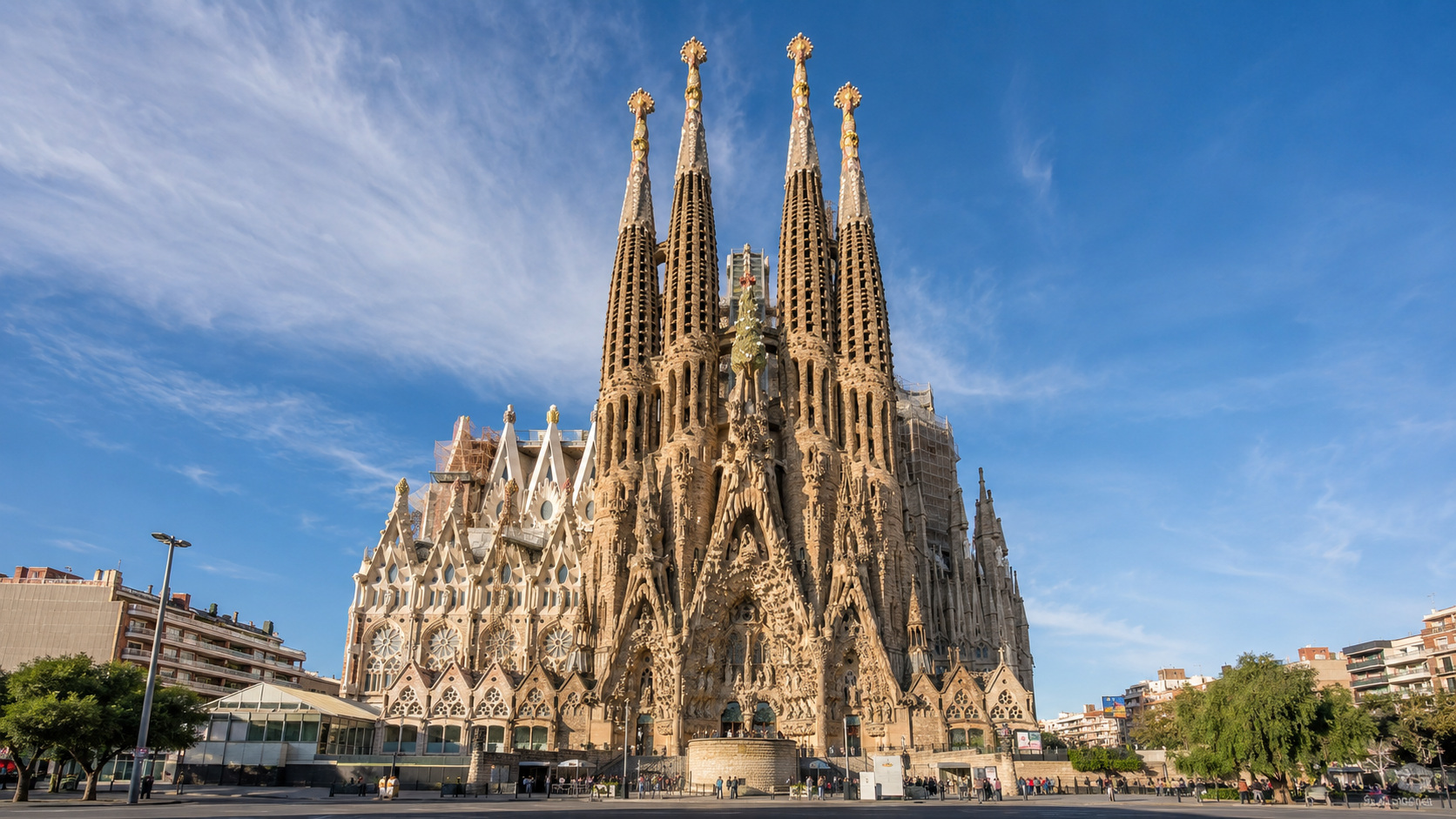
Construction started in the nineteenth century and changed significantly after Gaudí took over. His design combines construction, geometry, natural forms and Christian iconography. Because different parts were built in different periods, the building shows both historical and contemporary designs.
Gaudí developed the project from an existing plan into a much more extensive and unique design.
The monumental facades each have their own thematic and architectural effect.
Columns, vaults, geometry and colored light determine the spatial experience inside.
The building has continued to be developed; therefore check current access and any restrictions with the official administrator.
The basilica contains many parts. Choose in advance whether you want to understand the architecture as a whole, compare specific facades or focus on the interior.
Rich natural forms and religious scenes form a densely elaborated composition.
This facade uses a more sober, angular visual language than the Nativity facade.
Branching columns, geometry and vaults structure the interior space.
The light effect can change during the day; there is no guaranteed best moment.
The towers determine the overall design, but tower access is not a standard part of every visit.
This can provide in-depth knowledge of design and construction history, insofar as it is currently accessible.
Visit idea
This order helps to read the architecture, but is not a mandatory route. The current entrance and walking direction may change.
Silhouette→Facades→Interior→Floor→Overall picture
Stand back from the area to see the towers and total mass.
Note the difference in composition, sculpture and atmosphere.
Focus on columns, vaults and light instead of trying to see every detail at once.
View documentation or an accessible tower if this is part of your reservation.
Look at the building again and place the individual parts into the overall design.
Constructive geometry, natural forms and Christian symbolism are connected in the design. Not every visible part was personally executed by Gaudí: later construction phases relate to preserved models, drawings and documentation, without every design intention being able to be determined with certainty.
Compare facades, construction and interior.
Choose a few clear scenes and use reliable explanations.
Pay attention to the overall picture, details and changing light without expecting a fixed photo moment.
Consult the official basilica shortly before departure.
The correct entrance and walking direction may change.
Take into account safety and clothing rules of a religious building.
Only reserve extra parts that you actually want to visit.
Work may affect routes or sight lines.
Preferably view the interior and facades as separate parts.
Choose combinations based on your time and interest; multiple extensive visits do not naturally fit into one short half-day.
The avenue connects to Hospital de Sant Pau, a separate modernist landmark.
Place the basilica within the larger grid and urban character of the district.
Park Güell, Casa Batlló and Casa Milà are separate visits and do not naturally fit into one short day.
The Sagrada Família is especially relevant for visitors with an interest in architecture, religious art and the long development of one exceptional building project. Even just the outside offers different perspectives, but a visit to the interior makes the construction and lighting effect more visible. Choose the form of visit that suits your time and interests.
The building connects constructive geometry, natural forms, light and Christian iconography in a basilica that was created over several construction periods.
Yes. The facades and silhouette can be viewed from the public space; inside, construction and lighting effects become visible differently.
No. Tower access depends on current conditions and is not a standard part of every visit.
That depends on the exterior or interior visit, any additional parts and your own attention. There is no fixed visiting time.
In the district of the same name, within the Eixample district.