Getting there from Barcelona
Compare not only the vehicle, but also the entire travel time including transfers or local onward transport.
Our practical choice
For a self-guided city day, usually take a regional train to Tarragona station. You can start from there on foot. Only choose Camp de Tarragona if the fast connection and the additional bus or taxi route make sense together.
Sample schedule for one day
The times are indicative. Check your own connections and allow for waiting and delays.
Train to Tarragona station and walk up.
Passeig Arqueològic and Roman walls.
Cathedral environment and streets of Part Alta.
Lunch in the old town.
Circus/Praetorium or archaeological museum, depending on opening.
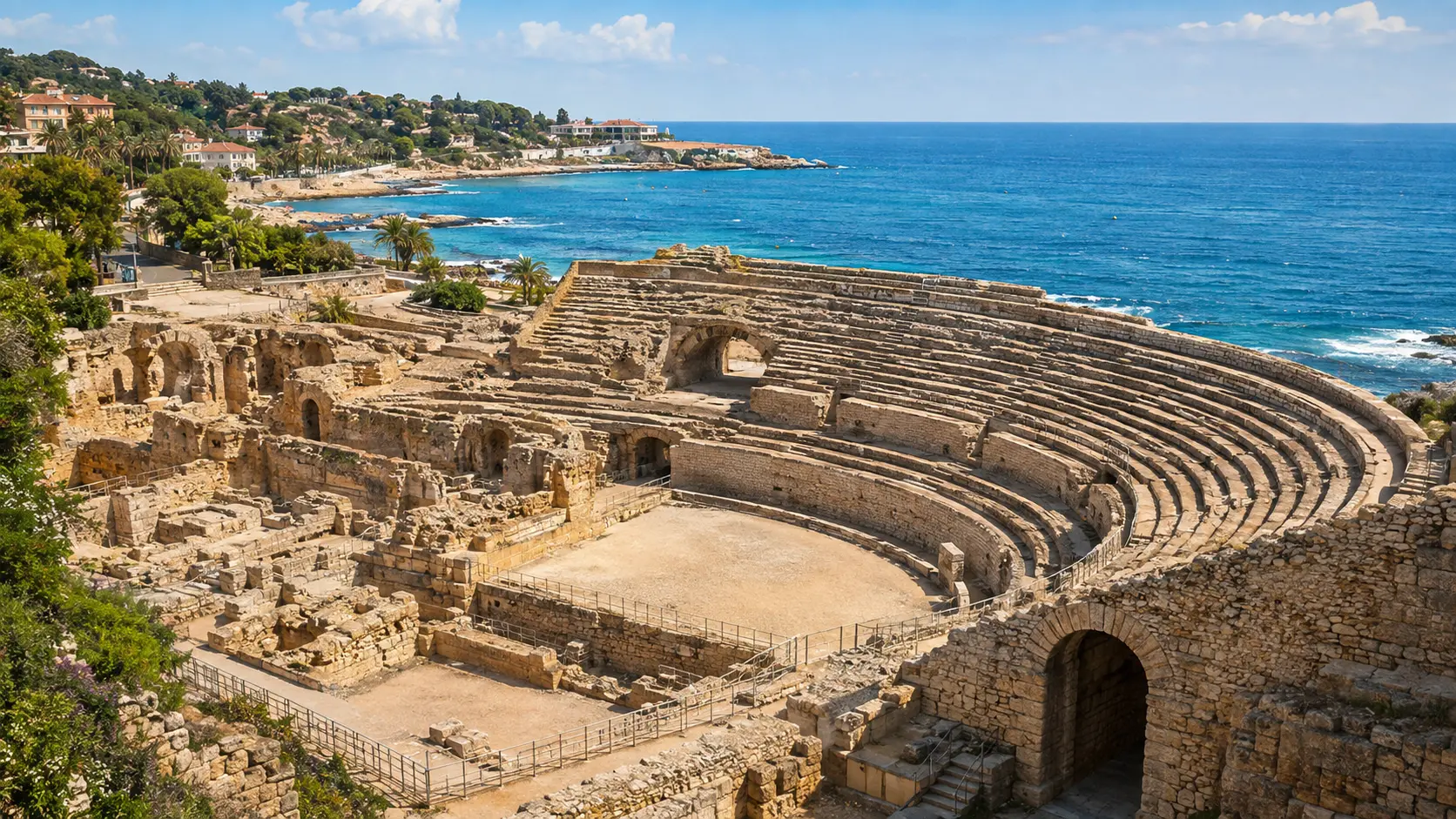
Amphitheater and Balcó del Mediterrani.
Short beach break or quiet walk back.
Train back with margin for height difference to station.
What can you realistically see and do?
Roman walls
The higher start of a logical city route. Allow 45–75 minutes.
Reservations: Check current opening and combined ticket.
Please note: The route contains height differences and uneven surfaces.
Part Alta and cathedral
Medieval streets superimposed on the Roman city plan. Allow 60–90 minutes.
Reservations: Different hours and tickets apply for the cathedral interior.
Please note: Religious functions may change access.
Circus and Praetorium
Roman structure interwoven with the current city. Allow 60–90 minutes.
Reservations: Check municipal monument status.
Please note: Not every part is always accessible.
Amphitheatre
Roman monument between old town and sea. Allow 45–60 minutes.
Reservations: Check opening; view from outside remains possible.
Please note: The route downwards later means ascending again towards the centre/station.
Lunch and breaks
Have lunch in Part Alta after visiting the walls. This way you avoid a tough climb immediately after the meal and the afternoon program is downhill. Bring water: archaeological routes have little shade. You can take something small with you for a short beach break, but don't let the monument program depend on a long lunch.
Independent travel or an organised tour?
Freedom
IndependentYou independently choose which archaeological locations are open and relevant.
OrganizedA tour follows a fixed selection with explanation.
Preparation
IndependentCheck station, opening hours and route questions.
OrganizedTransport and context are largely arranged.
Suitable for
IndependentTravellers who like to walk and read by themselves.
OrganizedWho wants to understand Roman history with a guide.
Who is this day trip for?
History buffs
For Roman monuments in a living city.
City walkers
For a route from high to sea.
Culture with coast
For those who want to take a short break by the sea after archeology.
Practical considerations
- Sturdy walking shoes for cobblestones, stairs and height differences.
- Bring water and sun protection; monuments are partly outside.
- Start early during summer and events.
- Check accessibility per monument; the city is hilly.
- Leave large luggage in Barcelona.
- View opening hours per municipal monument.
- Plan the climb or walk back to the station well.
- Rain and heat can make a shorter outdoor route wise.
Six concrete tips for this Tarragona
Check the station
Tarragona and Camp de Tarragona are not interchangeable.
Start at the top
Then walk largely towards the sea.
Choose three main locations
Not every Roman remains has to be visited in one day.
Check combination tickets
Municipal monuments can provide shared access.
Save beach as an option
Not as a mandatory last time slot.
Check Monday
Museums and monuments may have different closing days.
Frequently asked questions about Tarragona
Which station do you need for Tarragona?
For a walking day trip, Tarragona station is usually the most convenient; it is near the city. Camp de Tarragona serves fast trains but is outside the centre and requires additional transportation. Compare the total door-to-door journey, not just the train time.
Can you see Roman Tarragona in one day?
You can see the main city monuments, but not every part of the Roman heritage in and outside Tarragona. For example, choose walls, circus/praetorium and amphitheater, with enough space for Part Alta and lunch.
Do you need to reserve the amphitheater in advance?
The access regulations may change due to maintenance, capacity or events. Check the official municipal monuments page shortly before departure. Even when the interior is closed, the location remains visible from surrounding viewpoints.
Is Tarragona suitable for a beach break?
Yes, but keep beach time short if archeology is your main goal. Plan sea and beach after the amphitheater and check weather, flags and return time. Sitges makes more sense when a long beach afternoon is more important.
Is Tarragona accessible?
Parts of the city are easily accessible, but Part Alta, walls and monuments contain slopes, stairs and uneven surfaces. Check the official accessibility information for each location and adjust the order.
Girona or Tarragona as a day trip?
Choose Tarragona for Roman heritage and sea views. Choose Girona for a medieval centre, Jewish quarter and city walls. Both can be reached by train, but require a different walking profile and substantive emphasis.
Practical resources
Always check changing schedules, access and opening times again before departure.
Last content checked: August 2026.