Residential area
A regular pattern of narrow streets and compact building blocks determines the historic district core.
Neighbourhood between city, port and sea
Barceloneta is a compact residential area between Port Vell and the coast. Narrow streets, low historic buildings, squares, the harbor edge and the beach are close together here, but do not form the same cityscape everywhere. A visit works best when you combine the neighbourhood centre with one part of the waterfront, instead of just walking along the boulevard and considering it as the entire neighbourhood.
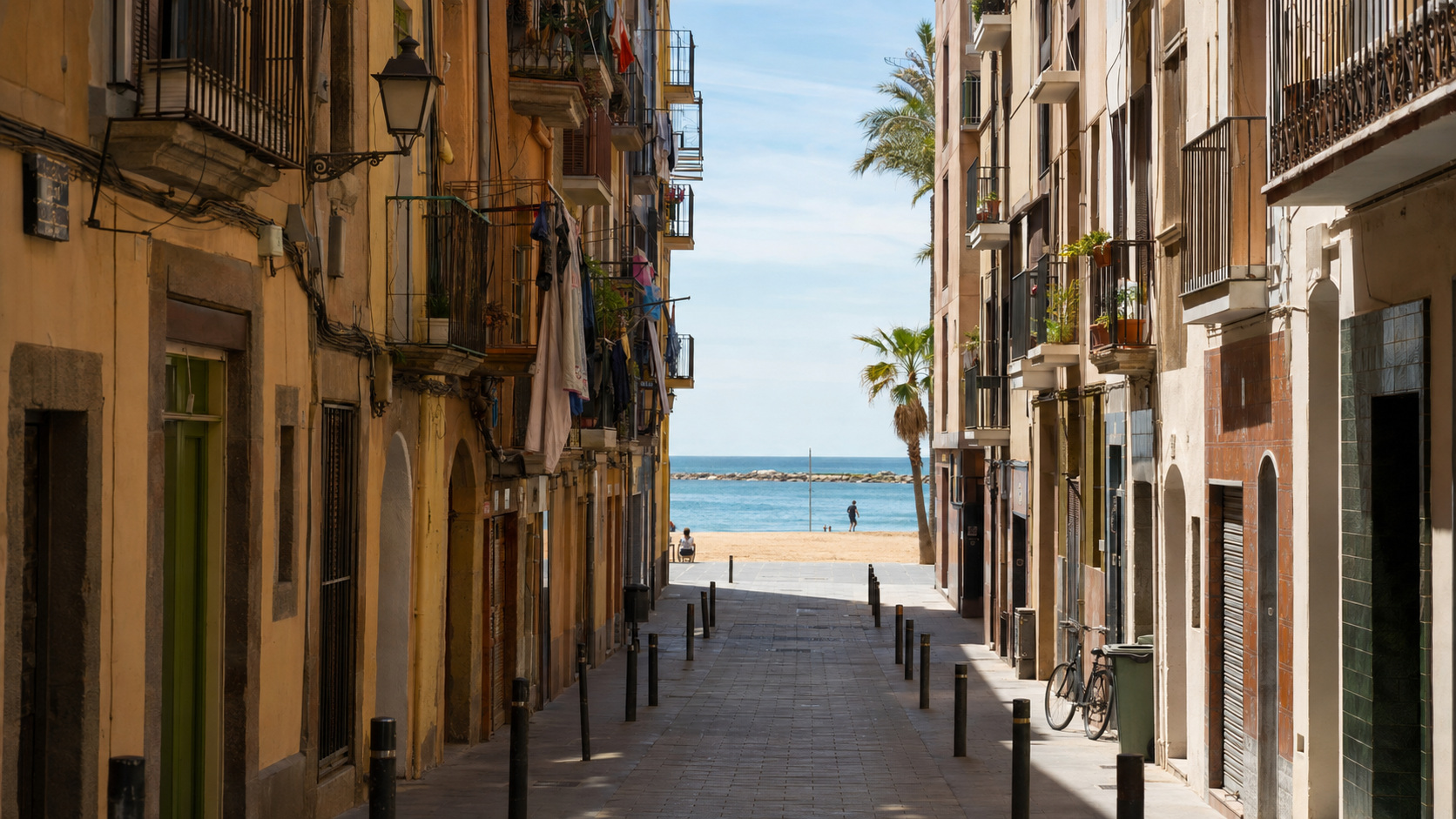
Barceloneta is more than the beach of the same name. The residential streets around the market and Plaça del Poeta Boscà have a different character than Passeig de Joan de Borbó, Port Vell and the busy coastal zone. Not all beaches, port areas or coastal facilities of Barcelona automatically belong to the Barceloneta district.
A regular pattern of narrow streets and compact building blocks determines the historic district core.
Passeig de Joan de Borbó provides a clear connection between Port Vell and the coast.
The sea is located right next to the neighbourhood and can be added as a separate part of a walk.
The location between the old harbor and the coast is visible in the public space and the orientation of the district, without treating residents or fishing traditions as tourist decoration.
The most famous parts of Barceloneta are close together, but a beach stay requires a different pace than a neighbourhood walk. Choose in advance whether you mainly want to walk through the residential streets, follow the harbor edge or spend time by the sea.
The narrow, straight streets in the neighbourhood centre show a different Barceloneta than the wide promenade. Take a targeted walk between a few landmarks and respect that this is primarily a densely populated residential area.
The market and the surrounding square form a central landmark in the district. View the public space during a walk and check current information with the official manager for a targeted market visit.
This wide route runs along the harbor side of the district towards the sea. Use the promenade as a connection, but also take a detour through the neighbourhood if you want to get to know Barceloneta as a residential area.
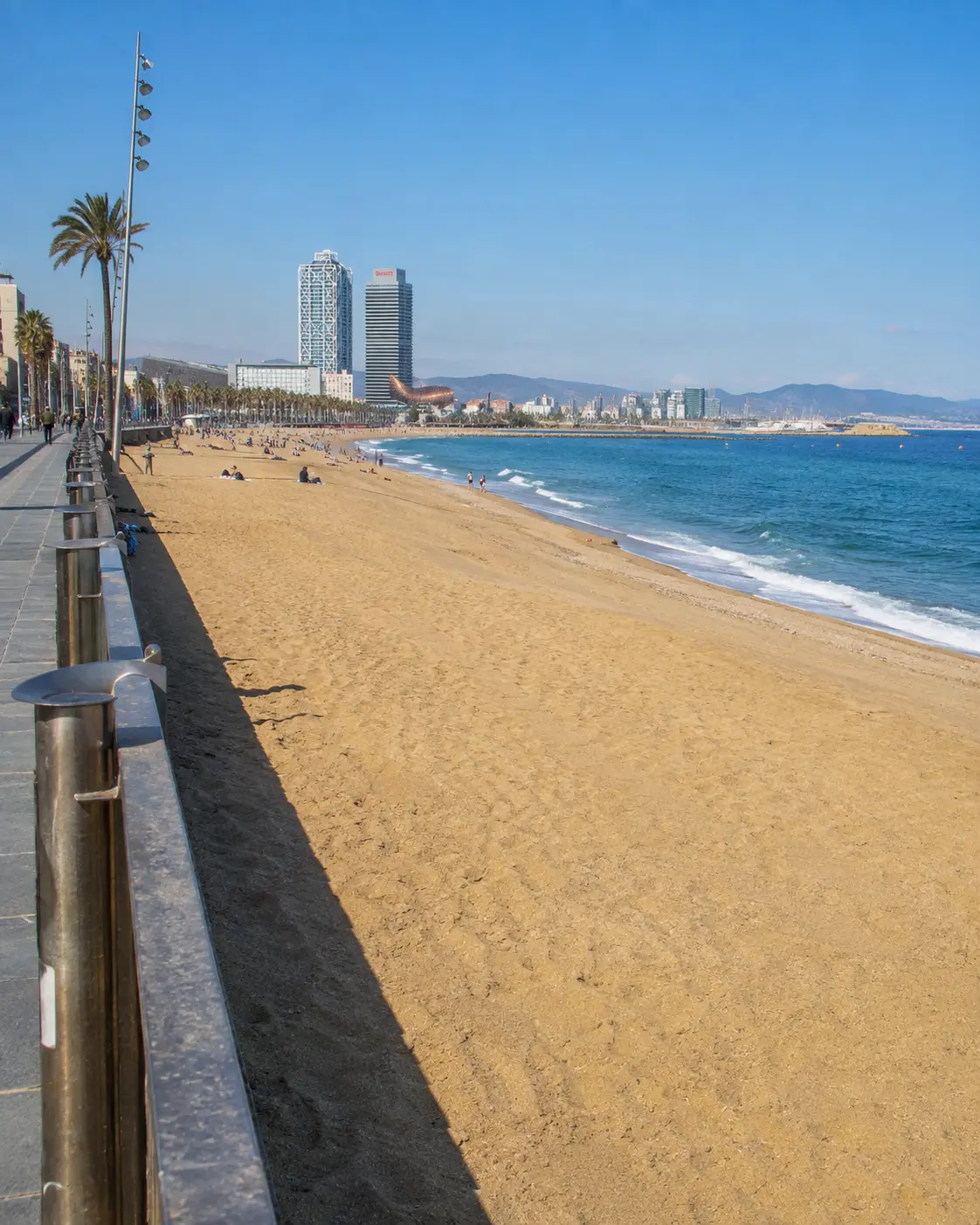
The beach borders directly on the neighbourhood and is a logical end point for a walk. The crowds, facilities and conditions differ per season and time.
Practical: Consult official sources for current beach information and local directions.
On the east side of the district, public space and industrial heritage are reminders of later changes around the coast. Both components can be viewed in their urban environment from the public space.
Palau de Mar is located at the western entrance to Barceloneta, on the harbor side. The building and its surroundings can serve as a starting point, but Port Vell is a larger port area and not fully part of the residential area.
Practical: The Museu d'Història de Catalunya is a possible cultural activity; check current visitor information with the official provider.
Hiking idea
This sample walk connects the harbor edge, the district centre and the coast. It is not a mandatory route and a longer beach or museum visit should be treated as a separate choice in the planning.
Palau de Mar→Passeig de Joan de Borbó→Mercat and Plaça del Poeta Boscà→Historic residential streets→Park and beach
Use the port area as a recognizable starting point. Decide here whether you want to stay outside alone or want to include a separate museum visit.
Follow the harbor side towards the sea, but turn off onto the residential streets before the end to see more than just the touristy waterfront.
Use Mercat de la Barceloneta and Plaça del Poeta Boscà as central landmarks. Only check current access when a market visit is important.
Walk through the compact neighbourhood centre via a short, logical loop. Approach homes and daily street life respectfully and do not present residents as part of a tourist attraction.
Walk via the east side towards Parc de la Barceloneta and continue to the beach if necessary. Make the beach a flexible ending, depending on weather, crowds and personal preference.
Barceloneta combines an intensively used residential area with routes to the harbor and beach. The coastal zone can attract many visitors on warm days and during busy periods, while residential streets have a different use and rhythm. The neighbourhood is not everywhere quiet, noisy, touristy, traditional or exclusively focused on beach visits.
Concentrate on the market, Plaça del Poeta Boscà and a short loop through the residential streets.
Follow Passeig de Joan de Borbó and possibly combine this with Palau de Mar or Port Vell.
Save the beach and boardwalk as a flexible terminus and check current local conditions.
The compact location makes it possible to combine a neighbourhood walk with a visit to the waterfront.
The transition between residential streets, harbor and coast offers different cityscapes within a limited area.
Barceloneta can logically connect to Port Vell or El Born without having to include all areas in one short route.
Personal preference, crowds, weather, mobility and a possible beach visit influence the experience. Half a day is only an indication; the actual duration depends on these choices.
The district centre is compact, but the harbour, beach and possible interior visits each require their own choice of route.
Choose in advance whether you start at Port Vell or walk from the coast towards the district.
Explore the compact residential area mainly on foot.
Be aware of narrow streets, busy promenades and limited shade on parts of the waterfront.
For beach, market or museum, check current information with the official manager.
In addition to the promenade, take a short loop through the neighbourhood to see different sides of Barceloneta.
Both require more time than a short neighbourhood walk; don't automatically plan them together.
Mercat de la Barceloneta and Plaça del Poeta Boscà provide support in the compact residential streets.
Conditions at the water's edge may change; adjust duration and route accordingly.
Consult official administrators when access, facilities or local directions are important.
Give residents space and, as in other busy parts of Barcelona, pay close attention to personal belongings and up-to-date local directions.
These are possible combinations. Do not automatically cover multiple entire neighbourhoods or areas in one day.
Start or end at the old harbor if you want to further explore the maritime side of the centre. Port Vell is an adjacent port area and not synonymous with Barceloneta.
Walk along the western side towards El Born if you want to combine the coast with historic streets and culture.
Continue following the boardwalk only when time, weather and energy permit. Vila Olímpica and further beaches are not part of Barceloneta.
Barceloneta is interesting for visitors who want to combine a compact residential area with port and sea. The district comes into its own when you not only follow the beach boulevard, but also view some of the streets and squares in the historic core. Choose in advance how much time you want to spend on the beach, museum or waterfront.
Connect some historic residential streets to the market, Passeig de Joan de Borbó and possibly the beach or Palau de Mar. Choose beach or museum as a longer main activity.
No. Barceloneta is also a compact residential area with narrow streets, squares and a clear harbor edge. The beach is one adjacent part of a visit.
That depends on walking pace, crowds, weather and a possible beach or museum visit. A short walk or half day is only an indication.
Yes, both are located directly in the area. Treat Port Vell as an adjacent port area and, if time is limited, choose one logical continuation.
Platja de la Barceloneta is located directly on the district. The coast of Barcelona also consists of several beaches and adjacent areas with their own locations.