Culture
Well-known museums and cultural institutions form important anchor points in the district.
Culture and city life
El Raval is located on the west side of La Rambla and is a densely built-up part of the historic centre. The district combines cultural institutions, historic buildings, squares and a very diverse street scene. El Raval shows a different side of Ciutat Vella than Barri Gòtic and El Born and is best explored around a number of chosen spots.
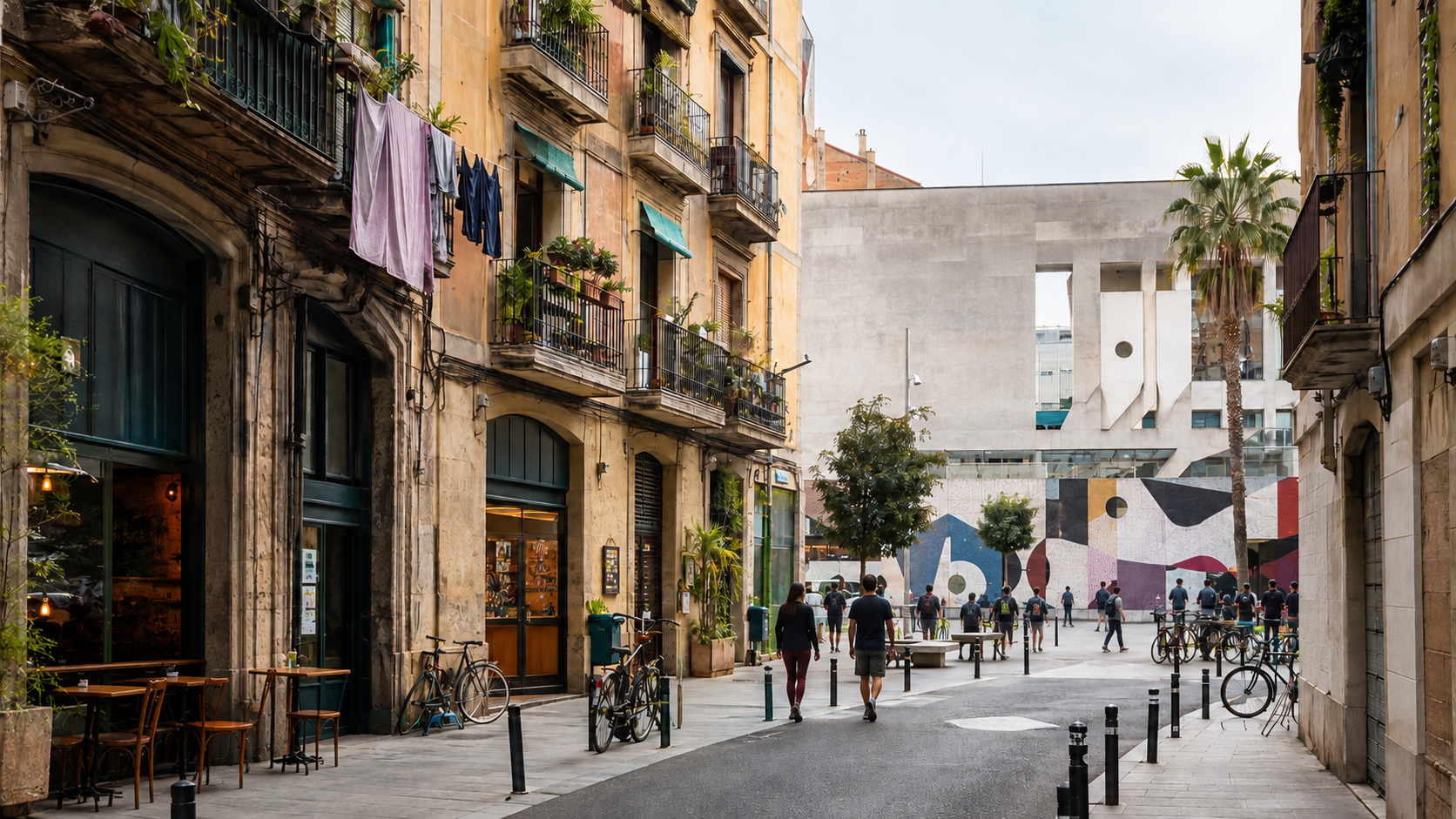
El Raval does not have a uniform character. The street scene and crowds vary greatly around the major cultural institutions, Rambla del Raval, historic buildings and the borders with La Rambla and Sant Antoni. These differences require a concrete and nuanced description, not one label for the entire neighbourhood.
Well-known museums and cultural institutions form important anchor points in the district.
Historic buildings and former religious and healthcare complexes show different layers of the city.
Squares, shops, homes and main routes are close to each other.
El Raval is located between La Rambla, Sant Antoni, Plaça de Catalunya and the southwestern edge of Ciutat Vella.
A visit to El Raval works best when you choose a number of clear destinations. For example, combine one cultural location with Rambla del Raval and a historic building, instead of trying to cross the entire district without a plan.
The Museu d'Art Contemporani de Barcelona is a possible main activity for visitors with an interest in modern and contemporary art. The square in front of the museum is also a recognizable public space in the district.
Practical: Check current exhibitions, admission and opening times with the official provider.
The Centre de Cultura Contemporània de Barcelona is located close to MACBA and organizes changing cultural programs. During a substantive visit, choose in advance whether MACBA, CCCB or another location will be the main focus.
This wide public space forms a striking contrast with much narrower streets in the district. Use Rambla del Raval as a landmark or break within a longer walk.
The historic complex around the former hospital buildings forms a quiet and architecturally interesting place within the district. Check on site which parts are publicly accessible.
Palau Güell is located on the edge of El Raval, close to La Rambla. The building can be chosen as a separate architectural visit or viewed from the outside during a walk.
Practical: Current prices, opening hours and access may change.
Located in the southern part of El Raval, this historic church can be included in a walking tour for visitors with an interest in older architecture. Check the current visit options in advance if an interior visit is important.
Hiking idea
This sample walk connects cultural and historical places through a number of clear landmarks. It is not a mandatory route and visitors do not have to view all the buildings from the inside.
MACBA and CCCB→Antique Hospital de la Santa Creu→Rambla del Raval→Sant Pau del Camp→Palau Guell
Use the museum area as a clear starting point. If necessary, choose one cultural institution for a more extensive visit.
Walk to the area surrounding Antic Hospital de la Santa Creu and view the historic architecture and publicly accessible outdoor spaces.
Use Rambla del Raval as a landmark and decide here whether to continue the walk to the southern part of the district.
Head towards Sant Pau del Camp if you are interested in historical architecture. Skip this stop if you want to keep the route shorter.
From the southern part, walk towards Palau Güell. From the area around La Rambla you can end the walk or continue to Barri Gòtic.
El Raval is an intensively used urban area with homes, cultural institutions, shops, restaurants and main routes. The atmosphere and hustle and bustle differ per street and time. The district is versatile and changeable; social problems are not romanticized here and residents or cultural diversity are not presented as a tourist attraction.
Choose MACBA, CCCB or one other cultural location as your main visit.
Combine the former hospital complex with Sant Pau del Camp or Palau Güell.
Walk between the museum area, Rambla del Raval and La Rambla and limit the number of side streets.
The presence of museums and cultural institutions makes the district interesting for a targeted cultural visit.
El Raval forms a clear contrast with parts of Barri Gòtic and El Born.
Those who like to explore dense and lively city areas can put together a route around a few landmarks.
Personal preference, crowds, mobility and the time of day influence how a visit is experienced. 'Experienced city walker' here describes a preference for intensive urban areas, not a safety assessment.
El Raval borders several parts of the centre. A chosen starting point and a few landmarks make the walk more manageable.
Choose in advance which side of the neighbourhood you want to start on.
Use MACBA, Rambla del Raval and La Rambla as possible landmarks.
Take busy, narrow or intensively used streets into account.
For cultural locations, check current entrance and visitor information.
Decide in advance which two or three locations you want to connect. This prevents the walk from running through too many sub-areas without a clear direction.
MACBA or CCCB can be the main focus of the daypart. Combine that with a limited walk in the area.
The museum area, Rambla del Raval and La Rambla provide guidance. Always choose one next point instead of recording every side street.
The intensity varies per street and time. Adjust the route if a passage feels less pleasant or too busy.
Programs, entrances and access may change. Consult the official manager when an interior visit is important.
For example, choose Barri Gòtic or Sant Antoni as a follow-up. As in other busy parts of Barcelona, pay close attention to personal belongings and follow current local directions.
These are possible combinations. Do not automatically cover multiple entire neighbourhoods or areas in one day.
Cross La Rambla if you want to see the other part of the historic centre.
Walk towards the western edge for a continuation in a neighbourhood with a wider street pattern and a different character.
Use La Rambla as a connection to the southern centre and the port, but don't automatically treat the entire route as one short walk.
El Raval can be a valuable addition for visitors who want to see cultural institutions, historic buildings and another part of the centre in addition to well-known monuments. The district is most visible with a targeted route around a few selected locations. This leaves room to experience differences between the streets and sub-areas in a nuanced way.
You can combine one cultural institution with Rambla del Raval, the former hospital complex, Sant Pau del Camp or Palau Güell. Choose a limited number of destinations.
MACBA and CCCB are two important cultural institutions in the district. Check their current program and admission with the official provider.
That depends on the walking area and a possible museum visit. A targeted introduction takes less time than an extensive cultural program; there is no fixed visiting time.
Yes, La Rambla is located between both areas. Preferably choose one main focus and do not try to automatically view both neighbourhoods completely.
Work with some landmarks, such as MACBA, Rambla del Raval and La Rambla. Adjust the route to your interests, mobility, crowds and the time of day.