World Exhibition
The arch marked the main entrance to the 1888 exhibition grounds.
Landmark in Barcelona
The Arc de Triomf is a monumental brick arch that was built as an entrance to the 1888 Universal Exhibition. The site is best understood in combination with the wide promenade and the route towards Parc de la Ciutadella.
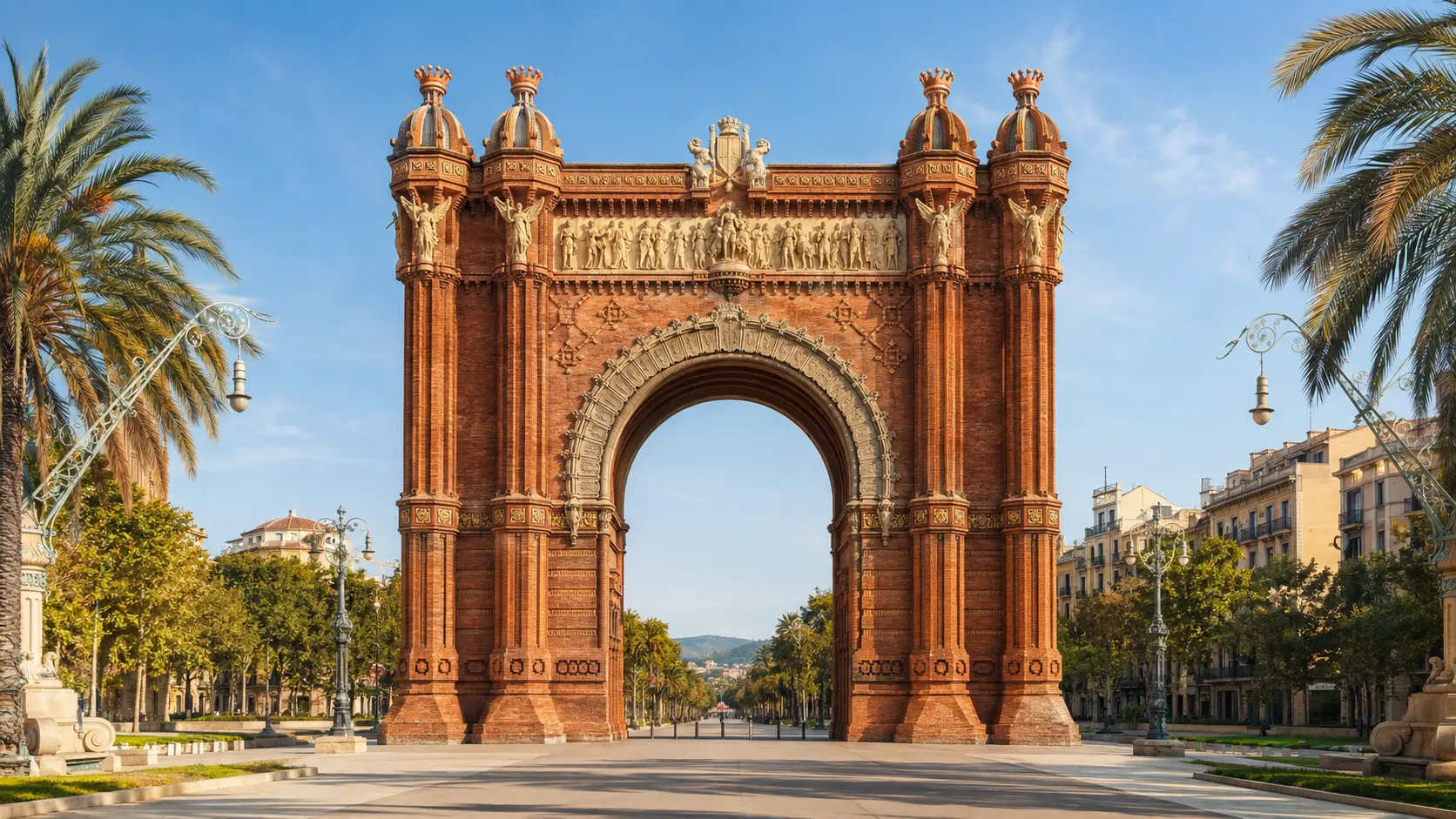
Josep Vilaseca i Casanovas designed the arch as a civil entrance to the World Exhibition. The meaning therefore differs from triumphal arches that commemorate military victories.
The arch marked the main entrance to the 1888 exhibition grounds.
Red brickwork gives the monument a different character than natural stone triumphal arches.
Friezes and sculpture contribute to the civil urban program.
The arch is at the beginning of the promenade towards Parc de la Ciutadella.
A targeted visit can be short. View the arch from different distances and then note the connection with the promenade and former exhibition site.
First look at the proportions of the central passage, side openings and top from a distance.
Material and masonry determine the appearance.
The decorative zones refer to the civil context of the World Exhibition.
The promenade reinforces the effect of the arch as an entrance and viewing point.
Compare the close-up view with the long perspective over the promenade.
The route towards the park makes the original urban function legible.
Viewing route
This short example structure helps to view the monument and urban context together.
Remote front→Under the arch→Details→Boardwalk→Ciutadella
View the full silhouette.
Compare the central and smaller passages.
Pay attention to brickwork and relief without blocking passageways.
Take a longer perspective on the urban axis.
Follow the junction towards Parc de la Ciutadella.
The arch was designed for the 1888 World Exhibition by Josep Vilaseca i Casanovas. The civil character and the relationship with the promenade are essential to the meaning.
Compare overall shape, material and decoration.
Place the arch in the context of 1888.
View the monument from a distance and walk part of the boardwalk.
The monument marks an important nineteenth-century urban intervention.
Brick and sight lines provide a clear viewing frame.
The arch forms a logical connection to Ciutadella and El Born.
The spot works as both a short stop and a starting point for a longer hike.
Choose a point of view for the entire silhouette.
Take cyclists and pedestrians into account.
Orient yourself towards Parc de la Ciutadella.
Events can temporarily affect routes.
First look at the full form.
Compare the operation in both directions.
Study brick and relief.
Do not block walking or cycling routes.
Use the urban axis for context.
Follow current local directions.
Choose combinations based on your time and interest; multiple extensive visits do not naturally fit into one short half-day.
Follow the boardwalk for the clearest historical context.
From Ciutadella, continue to historic streets and cultural sites.
Use the area as a starting point for a broader city walk.
Arc de Triomf is especially a strong short stop within a walk. The monument takes on greater significance through the promenade and the historical connection with the 1888 exhibition site.
As the main civil entrance to the 1888 World Exhibition.
Josep Vilaseca i Casanovas designed the arch.
The passageways are in public space; take local directions and other users into account.
Yes. A wide promenade connects the area surrounding the arch with the park.
That depends on your attention and a possible walk on the promenade or through the park.