The market hall
Mercat de Sant Antoni is an architectural and functional anchor point in the neighbourhood.
Market and city life
Sant Antoni is located on the southwest side of Eixample and is characterized by the market hall, residential streets and connections to the centre, Poble-sec and El Raval. The district has fewer individual monuments than some other parts of Barcelona, but offers a bright cityscape around Mercat de Sant Antoni, Avinguda Mistral and traffic-calmed parts of Carrer del Comte Borrell. A visit works best as a targeted walk through the neighbourhood and not as a forced list of top attractions.
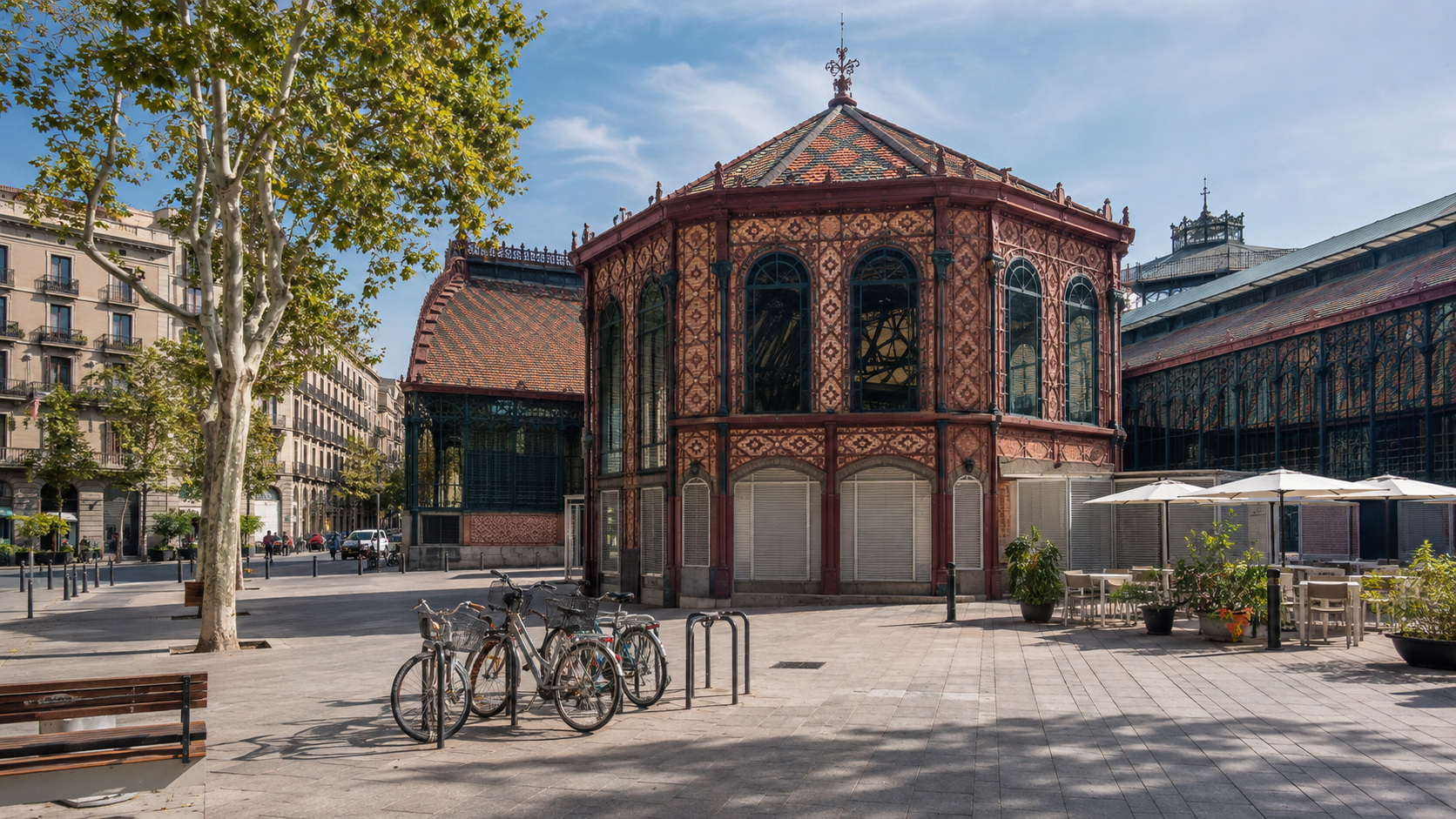
Sant Antoni is an official neighbourhood within the Eixample district. The market hall is an important landmark, but the district also consists of homes, schools, shops, restaurants and intensively used public space. Sant Antoni is not exclusively a market area, hip dining district or extension of El Raval.
Mercat de Sant Antoni is an architectural and functional anchor point in the neighbourhood.
Streets and squares around the market show how traffic, walking, accommodation and daily use coexist.
Sant Antoni is primarily an inhabited urban district and not a collection of separate tourist attractions.
The district is located between other parts of Eixample, El Raval and the surroundings of Paral·lel and Poble-sec.
The most important places can be connected in a compact walk. The value of the visit lies mainly in the combination of market architecture, public space and residential streets, without an artificial monument list.
The large market hall is the most important architectural landmark of the district and has various market functions. See the building and its surroundings as part of a walking tour.
Practical: Check current opening, market days and access with the official manager.
The immediate surroundings of the market hall show the transition between a large public building and the regular street pattern of Eixample. Walk a full side or corner to view the shell and facades.
Parts of Carrer del Comte Borrell have been given more space for pedestrians and residents. Use the street as a connection and assess the current layout on site.
Avinguda Mistral forms a diagonal route through the Eixample grid and has a different street profile than the surrounding building blocks. The entire avenue is not exclusively located in the central part of Sant Antoni.
Ronda de Sant Antoni marks a transition between Sant Antoni and the centre around El Raval. Not all places on both sides automatically belong to Sant Antoni.
The regular building blocks and sloping street corners place Sant Antoni clearly within the Eixample city plan. Note how market, residential streets and public space come together within this grid.
Hiking idea
This sample walk connects the market hall with several recognizable streets and public spaces. It is not a shopping route and not a mandatory list of stops. Only check the current market function when a visit to the interior is important.
Avinguda Mistral→Mercat de Sant Antoni→Streets around the market→Carrer del Comte Borrell→Ronda de Sant Antoni
Use the diagonal lane as a recognizable starting point and note the difference with the surrounding grid. Choose a starting point that matches the direction you are coming from.
First view the market hall from the outside and note the scale of the building within the residential streets. Only enter if the current access and market function suit your visit.
Walk along part of the exterior and see how entrances, corners and surrounding public space differ. Don't make it a full loop if you want to keep the walk short.
Use the street as a connection through the residential area. Take into account daily use by residents, cyclists, playing children and visitors, without guarantees about peace and quiet or freedom of traffic.
Use the ronda as a transition towards El Raval or the central part of the city. End the walk here or consciously choose one adjacent area as a continuation.
Sant Antoni is an intensively used residential area with a large market, local facilities, traffic, restaurants and public space. The atmosphere differs between the market environment, traffic-calmed streets and busy connections on the edges. The neighbourhood is not always quiet, exclusively local, hip, authentic, tourist-free or especially an entertainment area.
Concentrate on Mercat de Sant Antoni and view several sides of the building and the immediate surroundings.
Combine Carrer del Comte Borrell with part of Avinguda Mistral and pay attention to differences in street design.
Walk from the market to Ronda de Sant Antoni and then choose whether to head towards El Raval or back through Eixample.
The market hall is a clear main point without the need for a long monument route.
The combination of residential streets, facilities and public space shows a functioning part of Eixample, without treating residents as attractions.
Sant Antoni can fit as a targeted stopover between Eixample, El Raval and Poble-sec, depending on the route chosen.
Personal interests, market activity, mobility, crowds and circumstances on the day itself influence the visit. The district does not automatically fit into every planning.
Sant Antoni is centrally located between different parts of the city. The best arrival location depends on the desired direction and whether the market is the starting or ending point.
Choose Mercat de Sant Antoni or Avinguda Mistral as an obvious starting point.
Explore the central part of the district mainly on foot.
Take into account busy peripheral streets, intersections and intensively used public spaces.
Before a market visit, check the current entrance, function and visitor information in advance.
The market hall is visible from several sides and helps with orientation. Build up the walk around this central point.
Market days and functions may vary. Consult current official information when interior design is important.
The scale, facades and corners of the market hall are interesting even without a visit to the interior. Walk along one or more sides.
Use the street as a connection through the residential area. Assess the current layout and busyness at the moment itself.
Streets and public spaces are used by many different people. Give residents, cyclists and playing children sufficient space.
El Raval, Poble-sec or another part of Eixample could be a logical progression. Don't automatically add multiple entire neighbourhoods.
These are possible combinations. Do not automatically cover multiple entire neighbourhoods or areas in one day.
Cross through the Ronda de Sant Antoni area to El Raval if you want to combine the market with cultural institutions or other parts of the historic centre.
Head south if you want to connect Sant Antoni with the area around Avinguda del Paral·lel and Poble-sec. This is a continuation to an adjacent area.
Continue along the street grid to other parts of Eixample when architecture or a longer city walk is the main focus.
Sant Antoni is especially interesting for visitors who want to combine a functioning residential area, a striking market building and the public space of Eixample. The district does not need a long series of mandatory monuments to provide a clear walk. A route around the market, Avinguda Mistral and Carrer del Comte Borrell provides a targeted introduction and can possibly be connected to one adjacent area.
See the market hall, surrounding streets, part of Carrer del Comte Borrell and Avinguda Mistral in a focused neighbourhood walk.
That depends on your walking pace, crowds and a possible market visit. A short walk or quieter part of the day is an indication, not a fixed duration.
You can view the architecture, different facades, corners and the surrounding public space. Check current market functions with the official administrator.
Yes. Ronda de Sant Antoni forms a transition towards El Raval. Choose one targeted follow-up destination instead of several entire neighbourhoods.
Yes. Sant Antoni is an official neighbourhood within the Eixample district.