Market function
The hall is primarily a place where products are sold and bought.
Landmark in Barcelona
Mercat de la Boqueria is a historic covered market on La Rambla. The hall combines daily trade, food culture and a recognizable urban location. A visit works best when you take the market function into account and take a specific look at the entrance, hall structure and different types of sales areas.
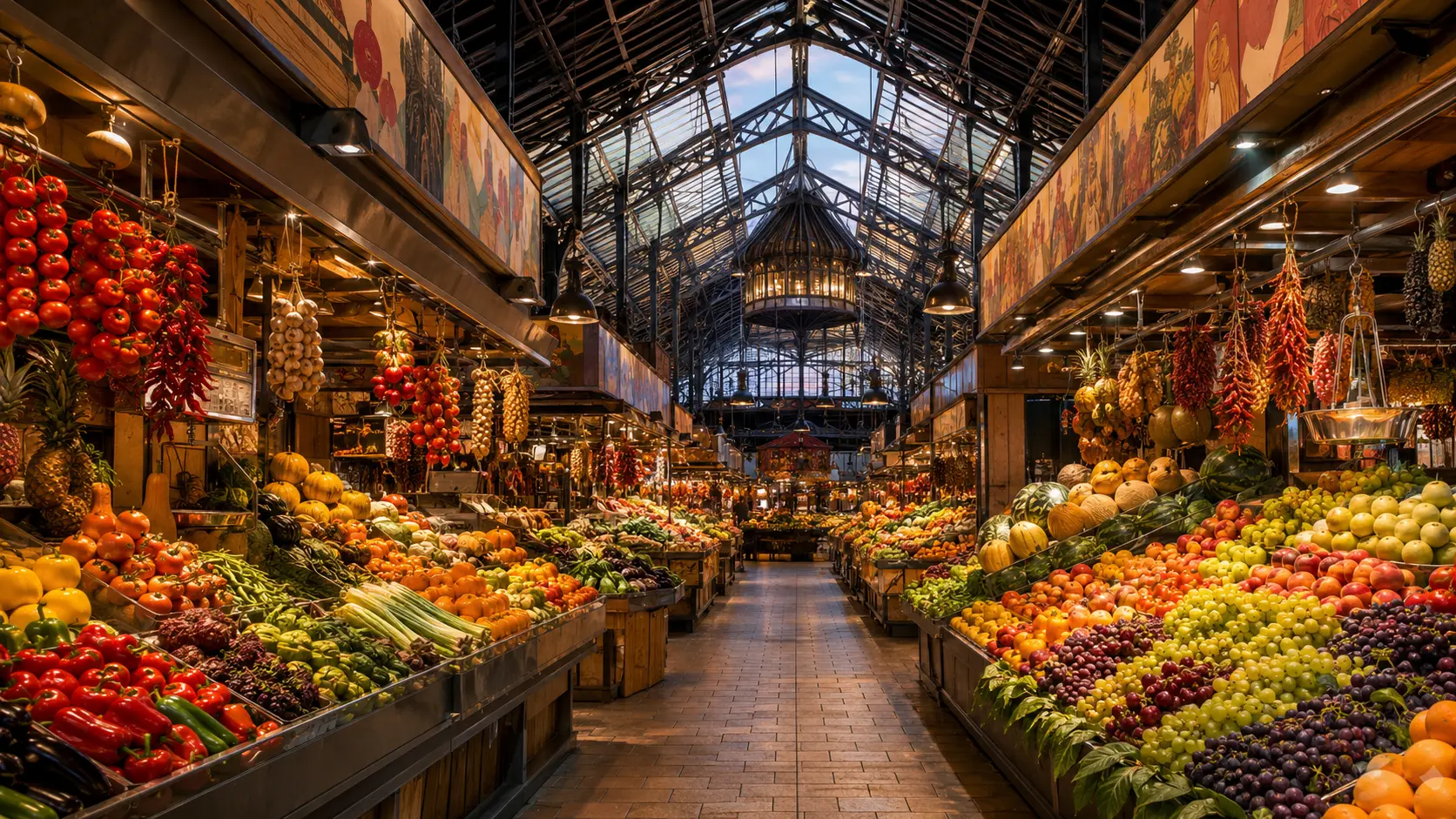
La Boqueria, also called Mercat de Sant Josep, is both a well-known visitor spot and a working market. Traders, customers and products are not a show for tourists.
The hall is primarily a place where products are sold and bought.
The market developed from trading on La Rambla into a permanent covered market.
The metal roof, entrances and spatial structure determine the character.
The market is located on La Rambla, right on the edge of El Raval.
Don't just look at products. Entrance, construction, aisles and organization together show how the market functions. Do not block commerce or passageways.
The recognizable entrance connects La Rambla with the interior of the market.
Canopy, daylight and open sides shape the market space.
The arrangement of stalls and walking routes makes different parts readable.
Different categories show the breadth of daily trading without ranking.
The back gives a different perspective on the relationship with El Raval.
Supply, sales and visitor flows come together in the same space.
Viewing route
This example structure helps to view the market briefly and respectfully. On-site instructions always take precedence.
Entrance La Rambla→Hall overview→Aisles→Construction and light→Appropriate exit
Start from the public space on La Rambla.
First read the main structure of the hall.
Don't try to stop everywhere.
View the canopy, light and layout.
Follow up without blocking backflows or trading.
The market developed from trade on La Rambla, settled at its current location and later received a roof. Today it remains a commercial food market with daily use.
Focus on the entrance, roof construction and layout.
Observe how product groups and walking routes organize the market.
View entrance, one part of the hall and the construction.
Daily trade and city life are central.
The roof construction and spatial layout provide architectural reference points.
The market connects La Rambla with El Raval and Barri Gòtic.
Crowds, market activity, personal preference and mobility influence how pleasant and extensive a visit is.
Please use the official website in advance.
Do not block entrances, aisles and sales areas.
Continue via La Rambla or Plaça de la Gardunya.
Respect access, walking direction and photography policy.
Please refer to the official market website.
Don't approach the hall as a checklist.
Give sellers and customers space.
Do that with person-oriented photography.
Also pay attention to roof and spatial structure.
Choose La Rambla, El Raval or Barri Gòtic.
Choose combinations based on your time and interest; multiple extensive visits do not naturally fit into one short half-day.
Include the market in a targeted walk along this city axis.
Use Plaça de la Gardunya to continue to some selected spots.
Cross La Rambla and choose clear destinations in the historic centre.
Mercat de la Boqueria is interesting as a working market, historic hall and part of the urban life around La Rambla. A targeted and respectful visit allows the architecture and daily market function to come into their own.
You see a working food market with a recognizable entrance, metal hall structure, aisles and different product groups.
On La Rambla, right on the edge of El Raval and opposite the side towards Barri Gòtic.
It is a working market and a well-known visitor spot; the daily trading function is paramount.
Yes. Both areas are on either side of La Rambla, but choose a targeted continuation.
Keep passageways clear, give traders and customers space and ask permission for personal photography.