Catalan is not just Barcelonan
Many relevant dishes come from the wider Catalan cuisine and are not exclusively urban.
CATALAN CUISINE IN BARCELONA
Barcelona's cuisine is shaped by Catalan traditions, Mediterranean products and influences from far outside the city. From tomato bread to roasted vegetables and crema catalana, this guide will help you recognize dishes and menu terms without automatically calling everything served in Barcelona local.
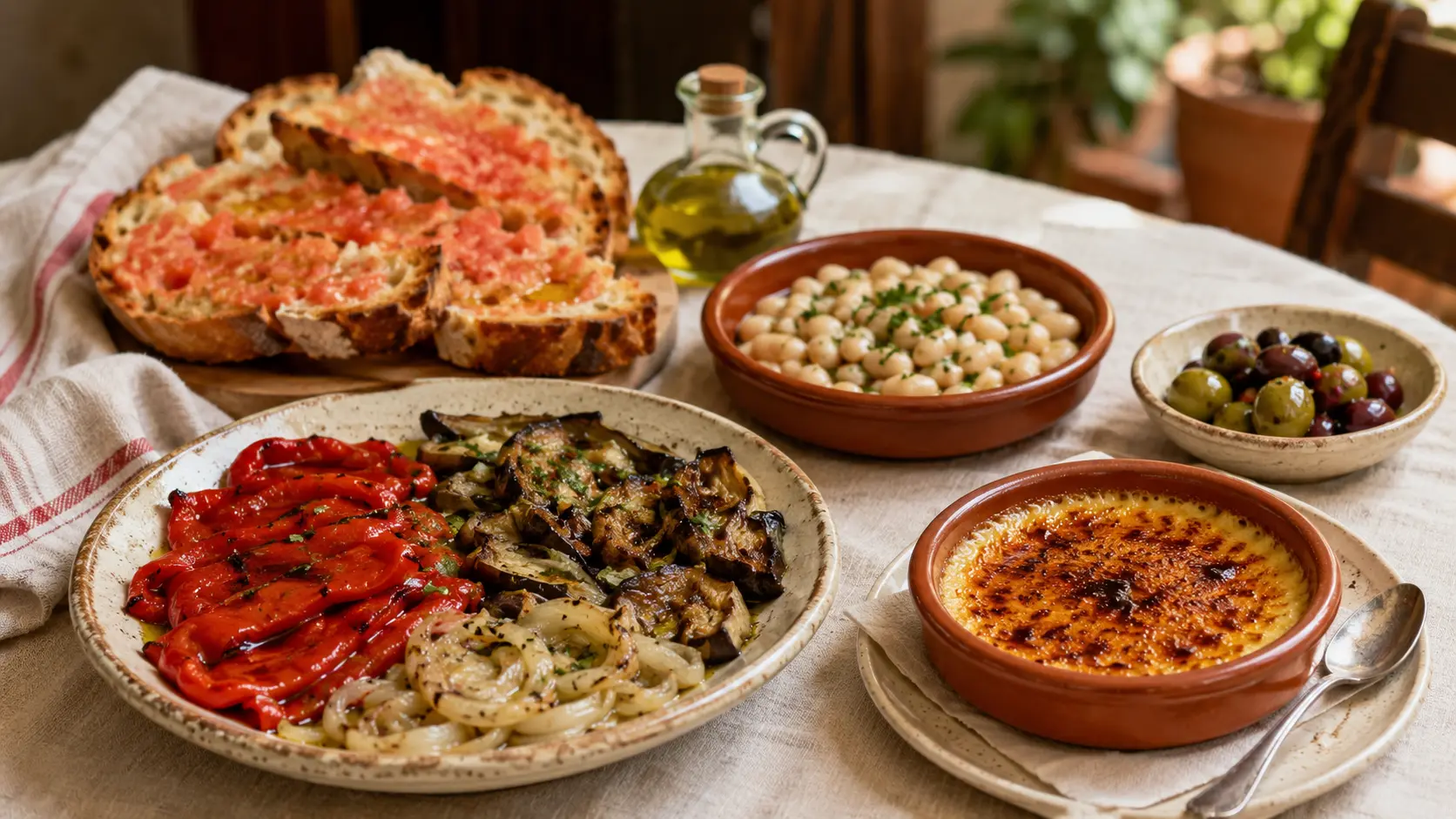
Many relevant dishes come from the wider Catalan cuisine and are not exclusively urban.
Fish, shellfish, meat, vegetables, legumes and combinations play different roles.
Some dishes or ingredients are more associated with a season or festive moment; offer is not guaranteed.
Restaurants can adapt classics; an interpretation is not automatically a historical recipe.
Read dish name and description; execution and ingredients may differ per cuisine.
Bread with tomato, olive oil and salt is closely linked to Catalan food culture; type of bread and version differ.
Roasted vegetables such as peppers and eggplant form the basis; additional ingredients and presentation vary.
This preparation with salted cod and vegetables has different proportions. Check fish, salt and other ingredients.
Sausage with white beans is a recognizable Catalan combination; sausage type, preparation and side dishes differ.
This fish stew has roots in coastal cuisine; fish, crustaceans and shellfish, potatoes and broth may vary.
This dessert combines a custard-like base with a caramelized top layer; similar desserts require nuance.
CHOICE AID
Barcelona brings together regional traditions, migration, trade and modern restaurant culture. Catalan dishes stand next to preparations from other Spanish regions and the rest of the world. Explain differences without attributing culinary authenticity solely to one type of establishment.
The guide provides guidance on unknown Catalan names on menus.
The explanation helps distinguish Catalan dishes from broader Spanish classics.
Variation between bread, vegetables, fish, meat and dessert makes more targeted comparisons possible.
Check more than just the Catalan name.
Ask directly about ingredients, preparation and cross-contamination.
Take into account changing or seasonal offers.
Present origin and traditional preparation only after factual verification.
Use them as a starting point to understand a menu.
Execution and ingredients may differ.
Catalan and broader Spanish are not automatically the same.
Compare ingredients and styles within the available menu.
Not everything is available all year round.
Origin does not automatically say anything about execution or taste.
See how small dishes can combine Catalan and broader Spanish influences.
Open guide →Read the difference between Valencian paella and other rice dishes.
Open guide →View ingredients and market context without guaranteeing local provenance or lower prices.
Open guide →Start with some recognizable Catalan dishes, read the full description and ask about the current version. This creates a more nuanced picture than when everything on a Barcelona menu is automatically called local.
Examples are pa amb tomàquet, escalivada, esqueixada, botifarra amb mongetes, suquet de peix and crema catalana.
Catalan refers to a regional cuisine within Spain; in addition, there are many other regional Spanish traditions.
Some versions may be vegetarian, but check stock, sauces, additives and cross-contamination.
Crema catalana is a well-known example; check what is currently on the menu.
Not always. Season, occasion and menu determine the current offering.