Paella and origin
Paella is a Valencian dish that is also widely served in Barcelona; it is not exclusively local.
RICE DISHES IN BARCELONA
In Barcelona you will find paella next to a variety of dry, creamy and broth-rich rice dishes. The name alone does not say everything about preparation, ingredients or portion size. With knowledge of some basic terms, you can make more targeted choices and better align expectations with what a restaurant actually serves.
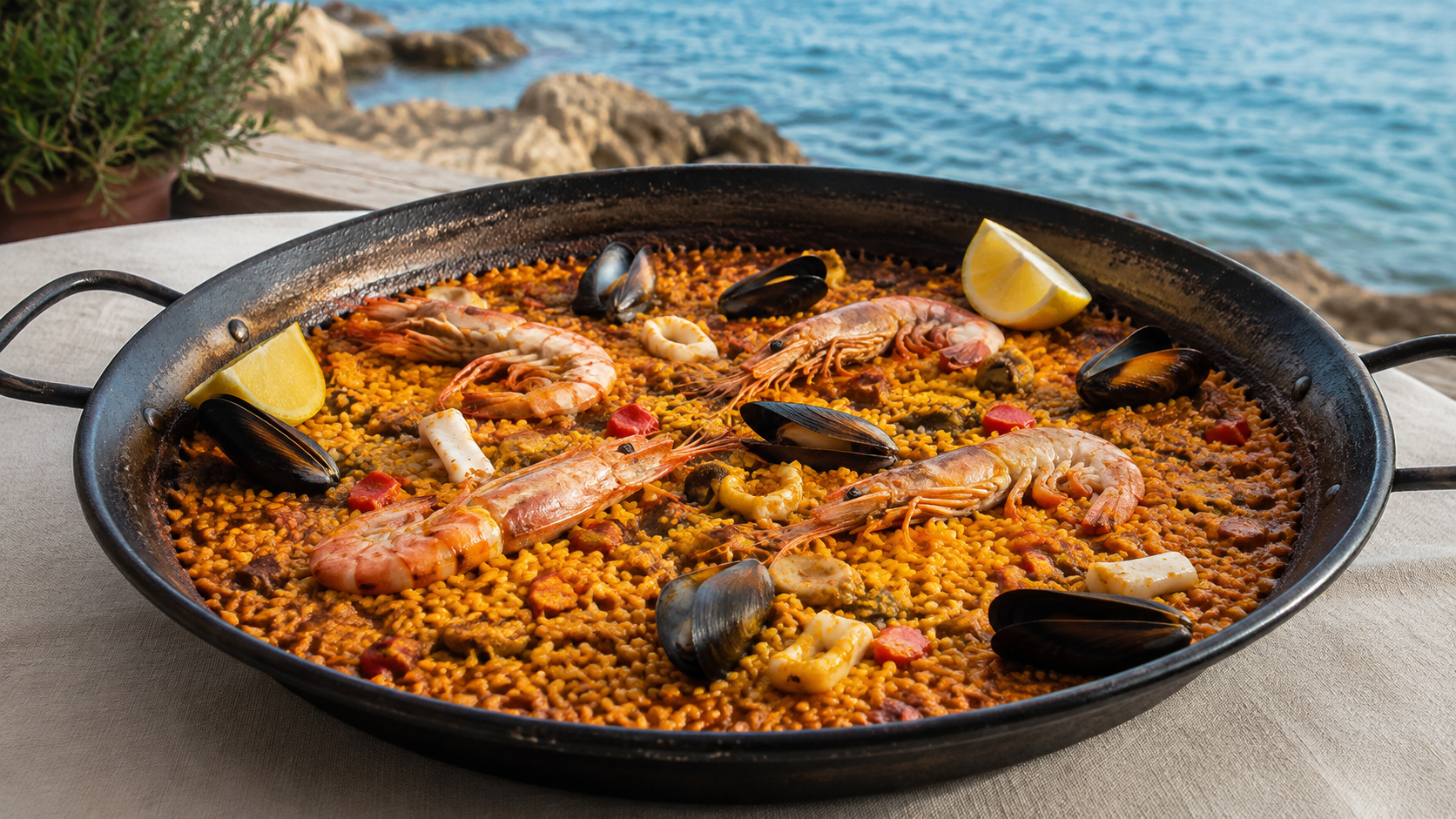
Paella is a Valencian dish that is also widely served in Barcelona; it is not exclusively local.
Dry, creamy and stock-rich rice differ clearly in texture and presentation.
Fish, seafood, meat and vegetables can be found separately or combined; read the full description.
Ask about portions, minimum order, preparation and allergens without assuming a one-size-fits-all rule.
Not every rice dish is rightly called paella. Use these styles to read menus more carefully.
The historic Valencian preparation has a specific tradition and is not automatically a seafood paella. Performances require nuance.
This frequently offered variant combines rice with products from the sea. The name proves nothing about catch or freshness.
Black rice usually gets its colour from squid or squid ink. Check sauces and allergens.
This Valencian style of rice is traditionally prepared with fish stock; presentation and ingredients may vary.
A broth-rich rice dish has a different texture than dry paella. Ingredients and amount of moisture vary.
Vegetable versions can be an alternative, but are not automatically vegan due to stock, sauces or cross-contamination.
CHOICE AID
Paella has its origins in Valencia. Barcelona also has Catalan and broader Mediterranean rice traditions and is a place where multiple styles are offered side by side. That doesn't make paella originally Barcelonan. Compare dry and stock-rich preparations without presenting one version as universally authentic.
The explanation prevents all rice dishes from being seen as the same paella.
The guide helps to check portions, ingredients and order unit in advance.
Focused attention on broth, seafood and cross-contamination helps ask better questions.
Check whether these apply per person, portion or pan.
Ask about main ingredients, broth and allergens.
Check current kitchen times and conditions at the business.
Compare the preparation method, not just the name paella.
Paella is originally Valencian.
The dish name does not always tell all the ingredients.
Check person, portion, pan and possibly minimum.
Distinguish between dry and brothy rice.
Think of broth, crustaceans, molluscs and cross-contamination.
Ask what applies at your time of visit.
Compare small shared dishes with a rice dish that is often chosen as the main meal.
Open guide →Place rice dishes in a broader Catalan context without changing their Valencian origins.
Open guide →Combine a meal with the port and coastal environment, without using the district as a guarantee of quality.
Open guide →Start with preparation style and ingredients, check how portions and prices are structured and inquire directly about changeable information. This way you can choose more consciously between paella and other rice dishes.
No. Paella is originally Valencian, although the dish is often offered in Barcelona.
You can find dry, creamy and brothy styles, with a variety of ingredients.
Paella is usually a drier preparation; arròs caldós clearly contains more broth.
This varies per case and court. Check order unit and minimum directly.
Plant-based versions may exist, but check stocks, sauces, preparation and cross-contamination directly.